
Westminster Abbey, St James’s Park, St Paul’s Cathedral, promised last time and delivered this time, eventually. London had other ideas first though, a park, a department store, a restaurant with a cat for a mascot, and a concert hall built out of heartbreak, before any of the famous names got their turn.
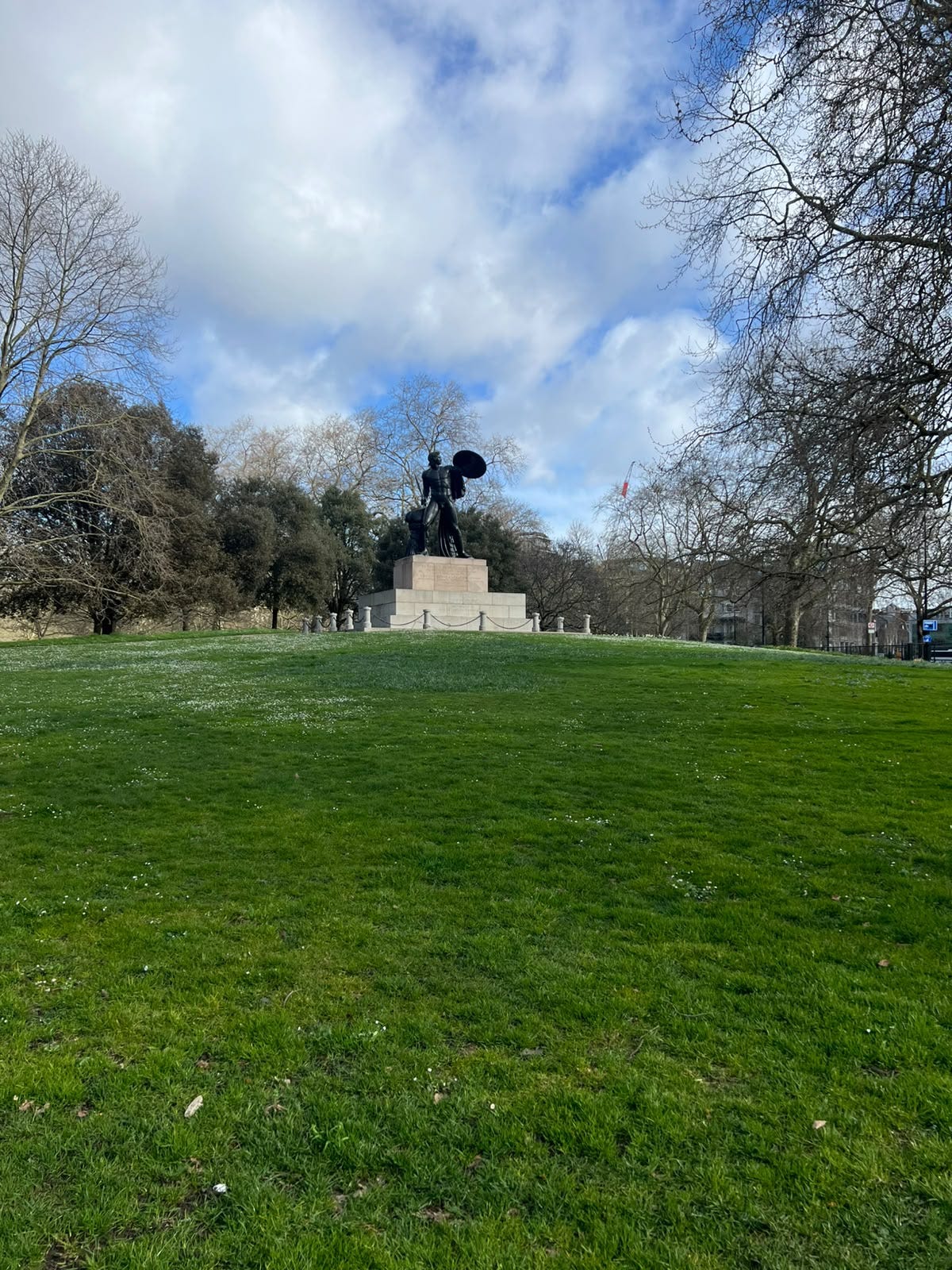
The morning started in Hyde Park, past the Achilles statue, which is not actually Achilles at all, just an anonymous Greek body borrowed for a monument to the Duke of Wellington. It was London’s first public nude statue since antiquity, fig leaf included, scandal included.
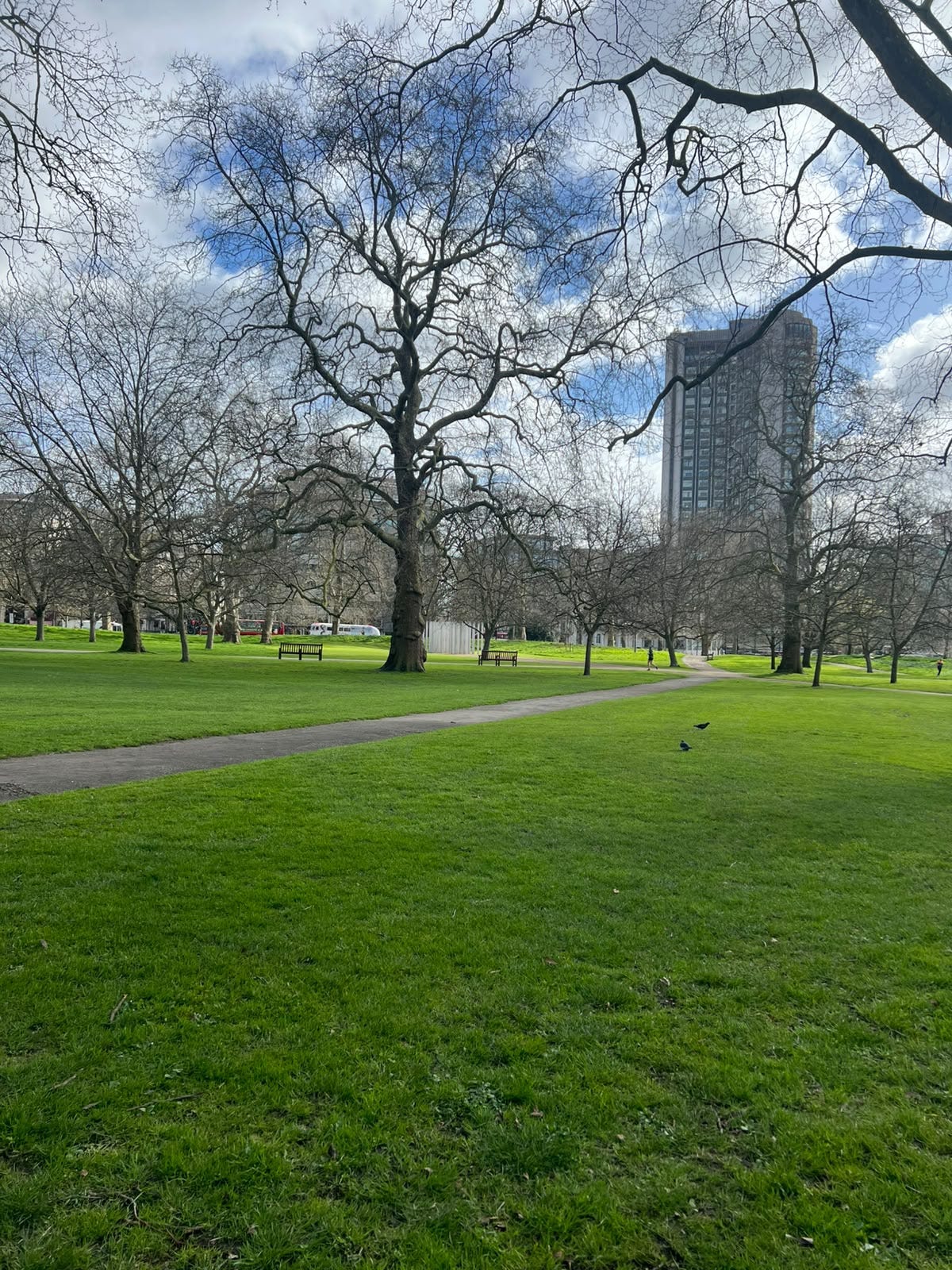
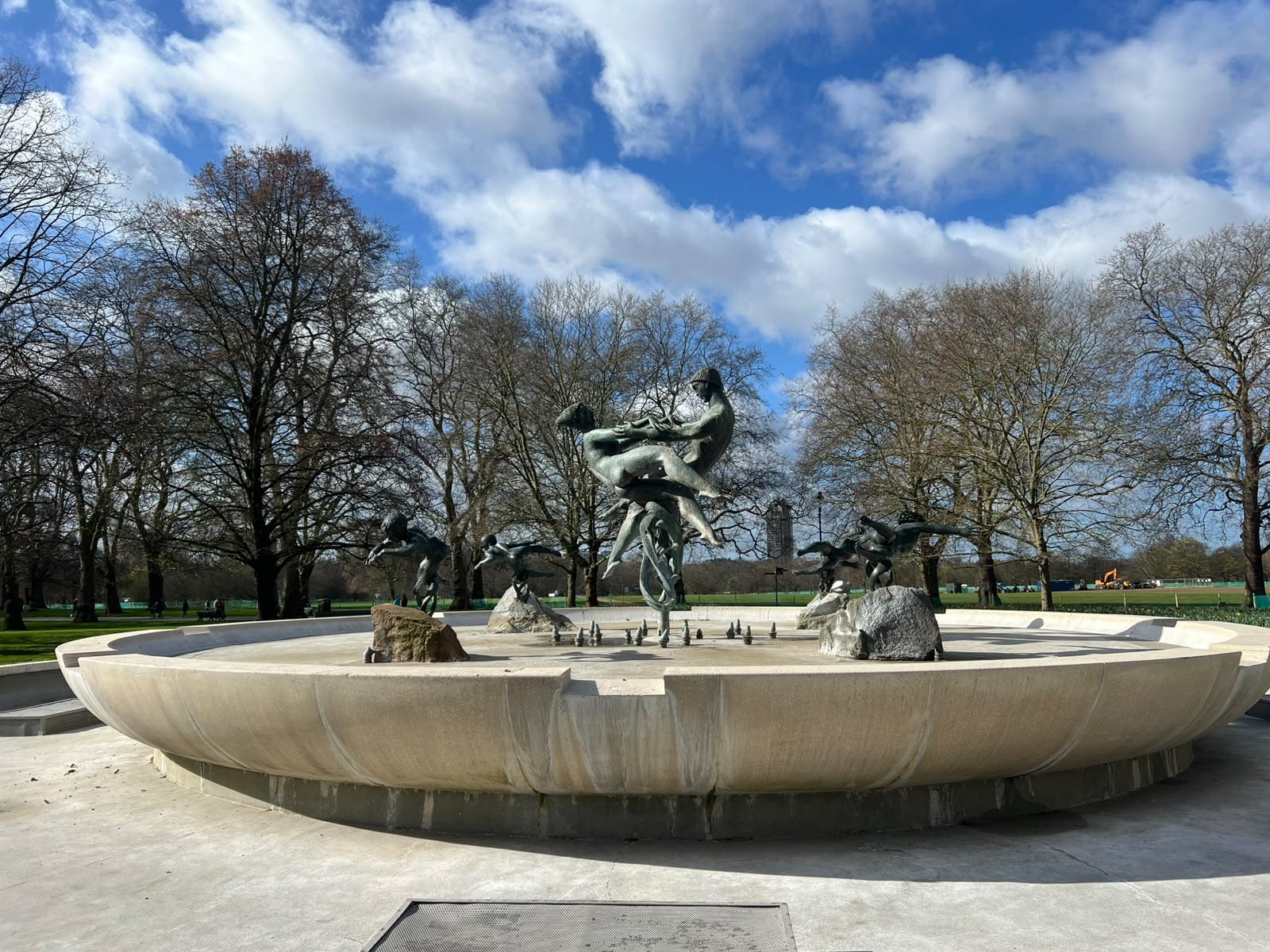
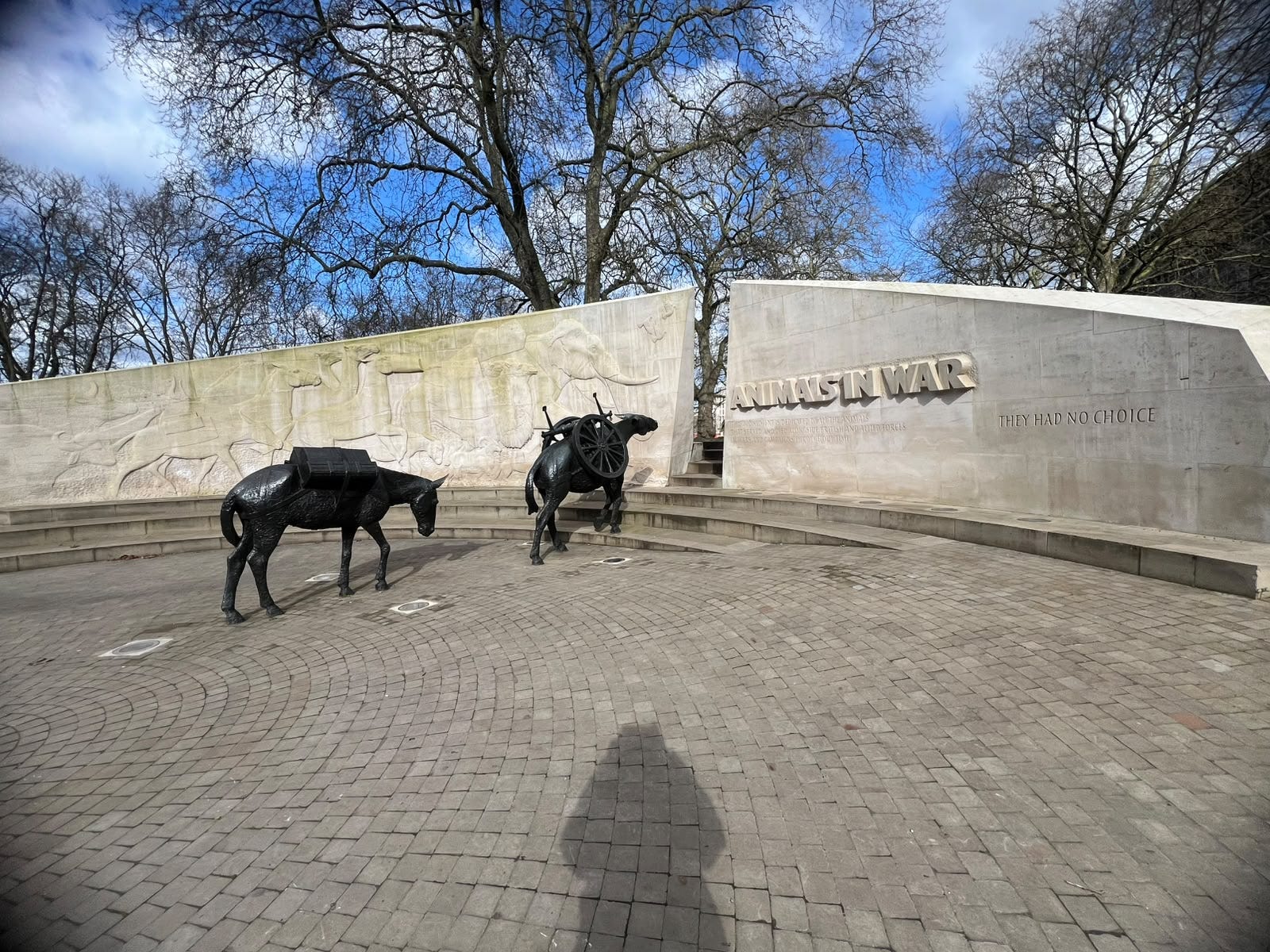
A fountain full of mid leap bronze figures came next, cheerful despite being called the Joy of Life, and then the Animals in War Memorial, two bronze mules walking straight into a stone wall carved with every creature Britain has ever sent to war. Its inscription does not soften anything, they had no choice.
Selfridges absorbed a satisfying hour of the shopper in me, no further commentary needed, some stops exist purely for the soul.
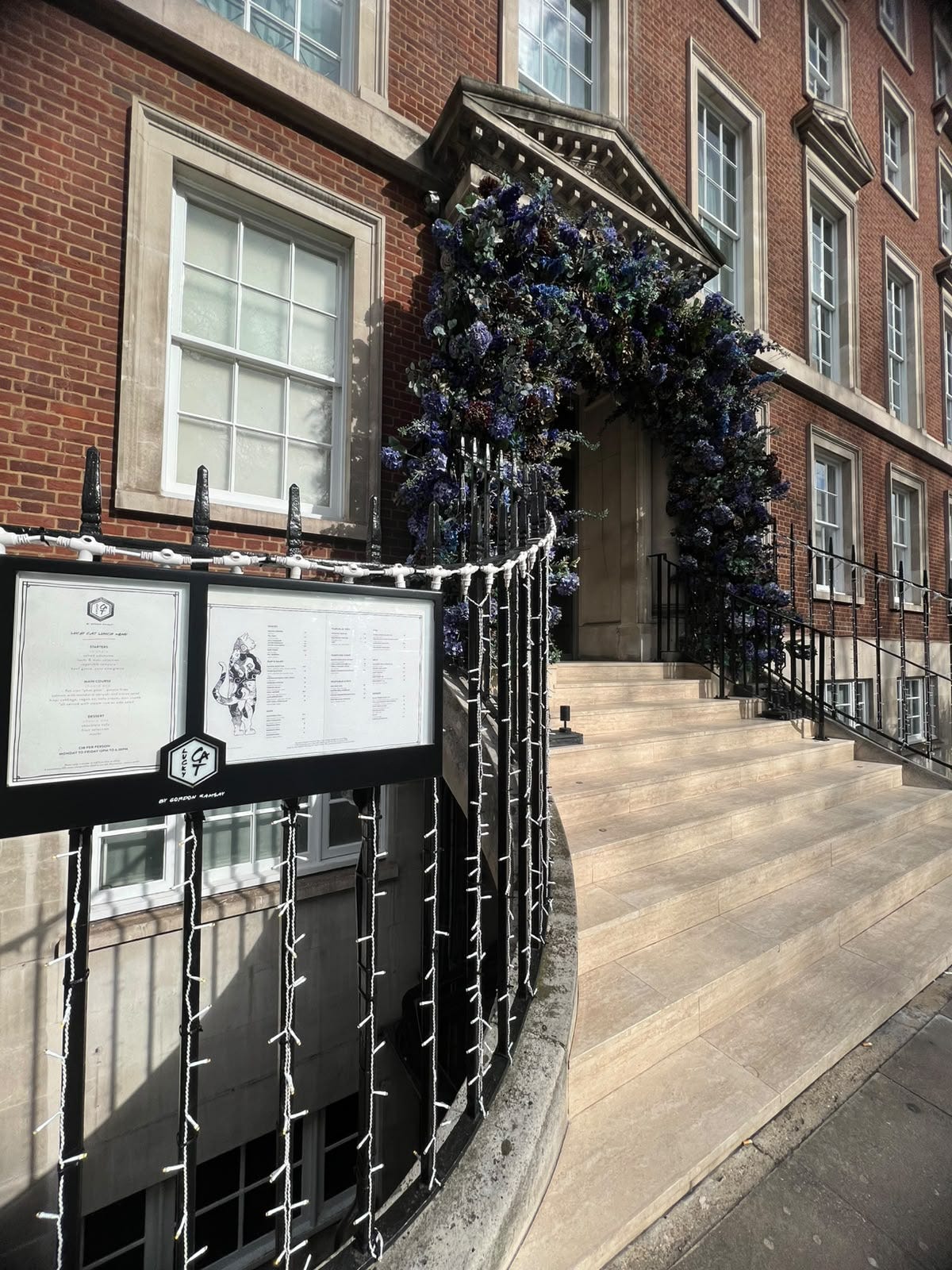
Lunch was Lucky Cat by Gordon Ramsay in Mayfair, under an entrance arch so dramatically done up in flowers it looked ready for its own wedding. I had the hand dived scallops, my ultimate weakness, and a plate of pork and kimchee gyoza sitting in more broth than a dumpling usually agrees to. No photos exist of either, because back then I had no idea food pictures were about to become a full time personality trait. I do, however, remember every bite, which anyone who knows me will tell you is less a skill and more an affliction.
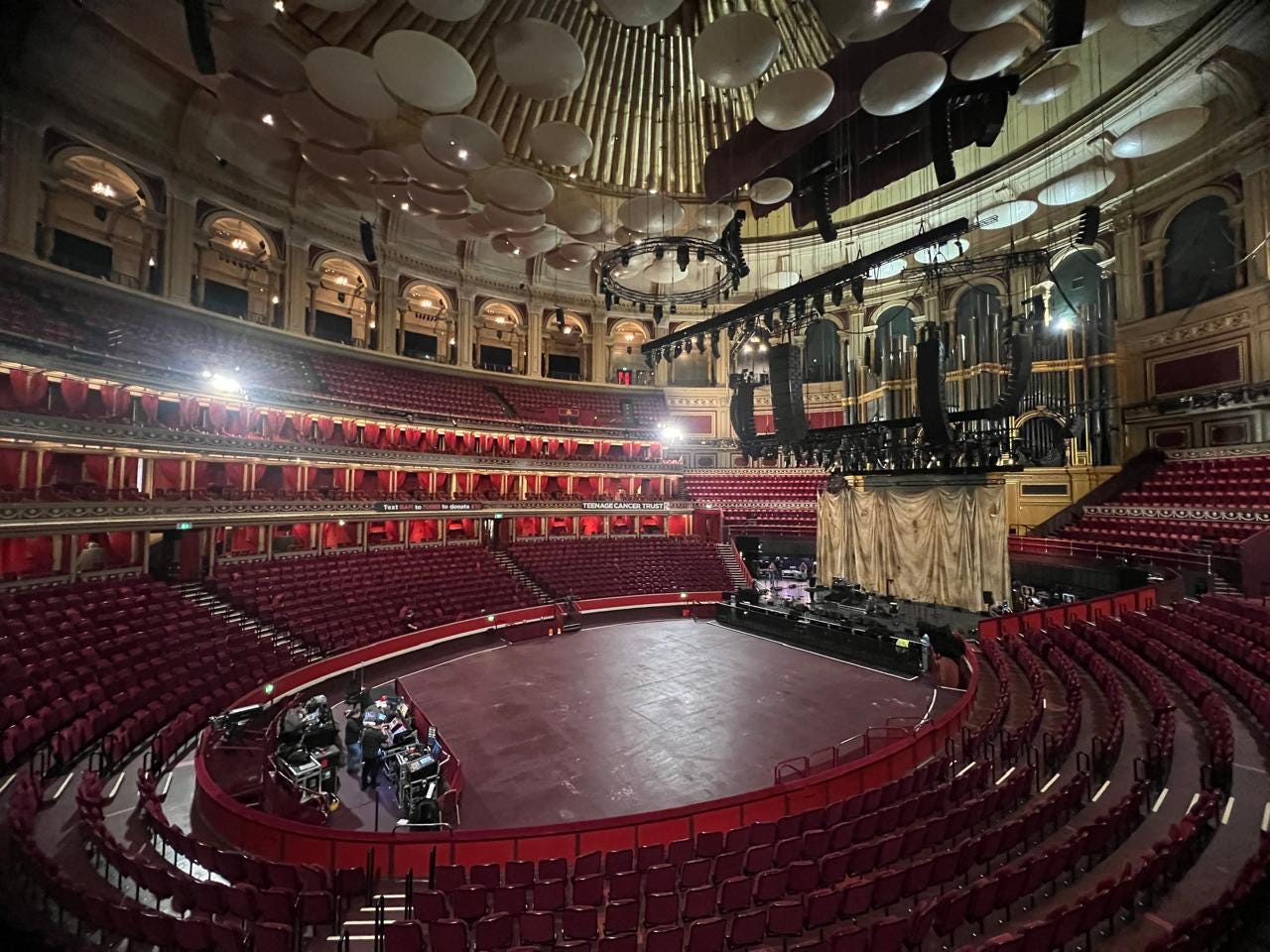
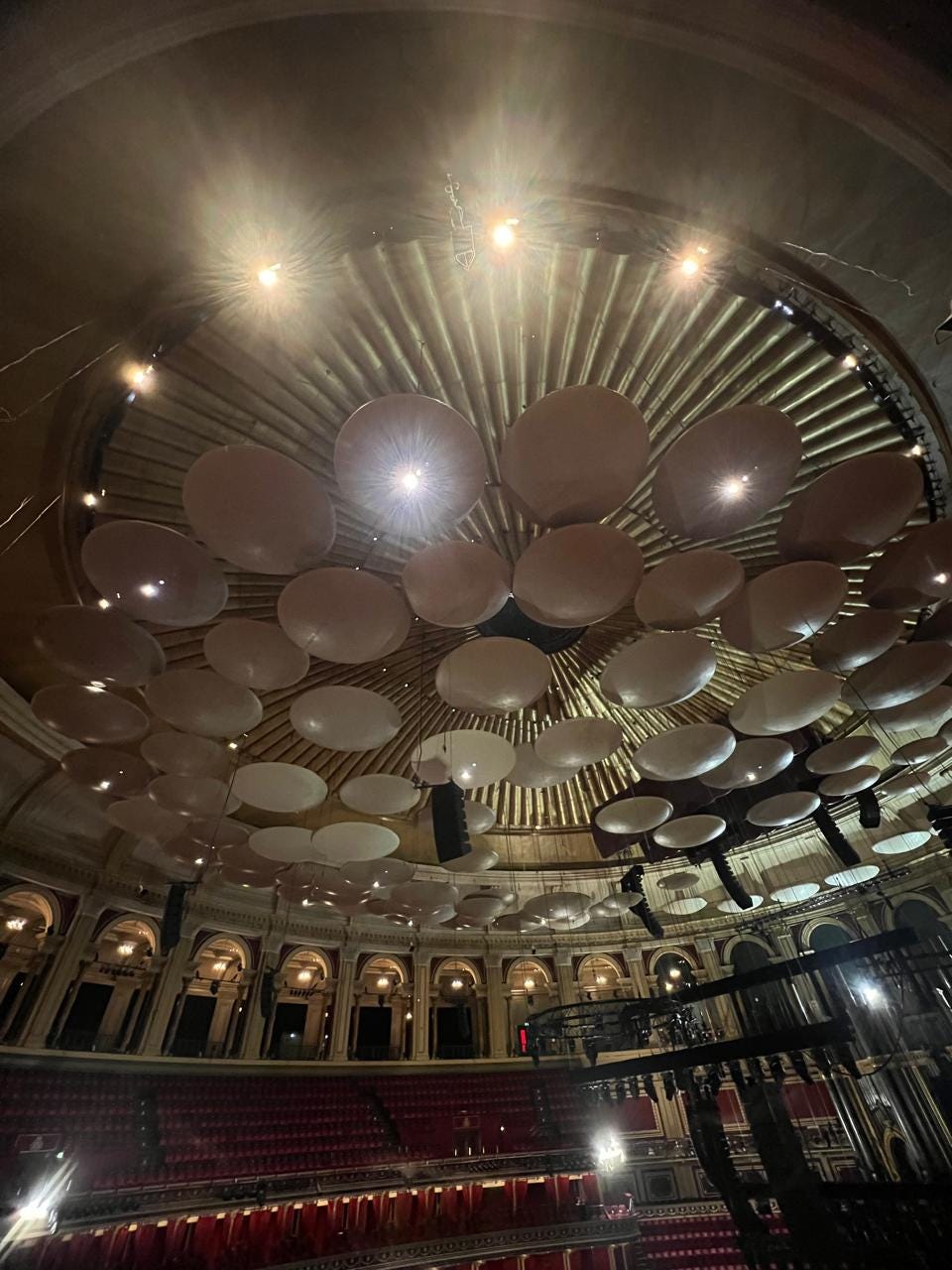
The afternoon belonged to a guided tour of the Royal Albert Hall, and it remains, without argument, one of my top five things I have ever done in this city. Prince Albert dreamed it up after the success of the Great Exhibition, then died a decade before it opened. Queen Victoria finally opened it herself in 1871, but she was so overcome that she could not get a word out, so the Prince of Wales stood up and delivered the welcome speech on her behalf while she sat there listening to her own opening ceremony.
The royal family still turns up for concerts here. So does everyone else, eventually. Eric Clapton has played this stage more than two hundred times since 1964, Adele filmed an entire live album here in one night in 2011 that went on to win a Grammy, and A.R. Rahman only just made his own debut on this same stage, selling it out without trying particularly hard to. Grand sumo tournaments have been staged here too, which has happened exactly twice in the hall’s entire history and never anywhere else outside Japan. Tennis was played here as well, an indoor championship that ran through the nineteen seventies. A building that has hosted Victorian grief, sumo wrestlers, and tennis finals under the same gilded ceiling has no business making sense, and yet.
One day I will sit in one of those red seats for an actual performance instead of a guided tour.
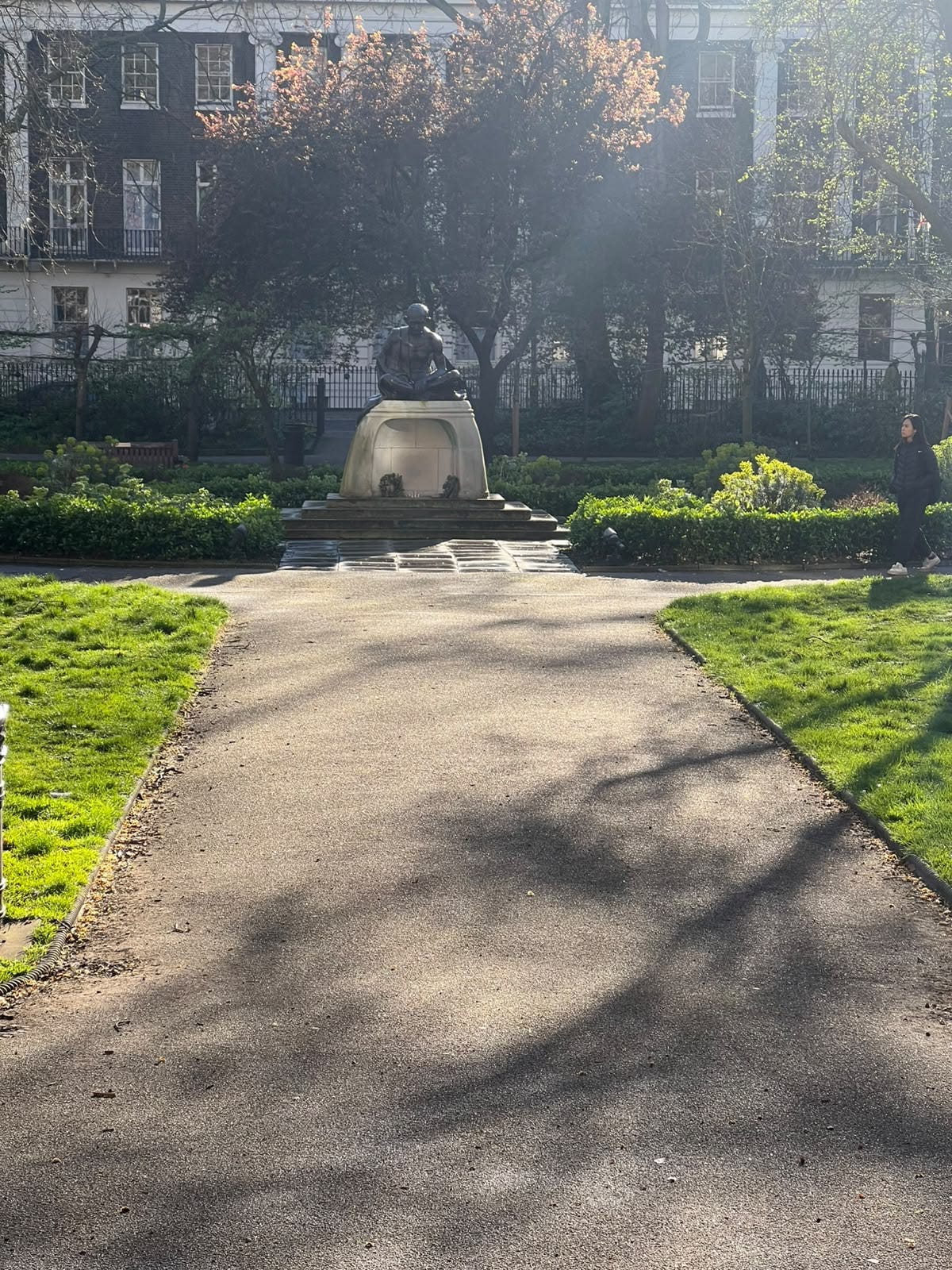
The next morning opened at a small park near Tavistock Square, where a statue of Gandhi sat glistening under a low morning sun, cross legged, unhurried, exactly how a man who studied law a short walk from here ought to be remembered. He was unveiled in 1968 by a prime minister, decades after walking these same streets as a student with no idea what he would eventually become.
That evening ran from Victoria Station straight into history, Westminster Abbey first, towers lit gold against a sky too blue to be accidental, then the Thames, then St James’s Park as the light properly started to fade. The lake held the London Eye on one side and the moon on the other, which felt like London showing off slightly, a weeping willow bent low over the water, and somewhere in that park a warden who lives on the grounds and has, I am certain, more stories than anyone has bothered to ask for. It was a life changing walk in ways I am still finding words for, loaded with history, architecture, love, and a peace that should have felt foreign and somehow did not.
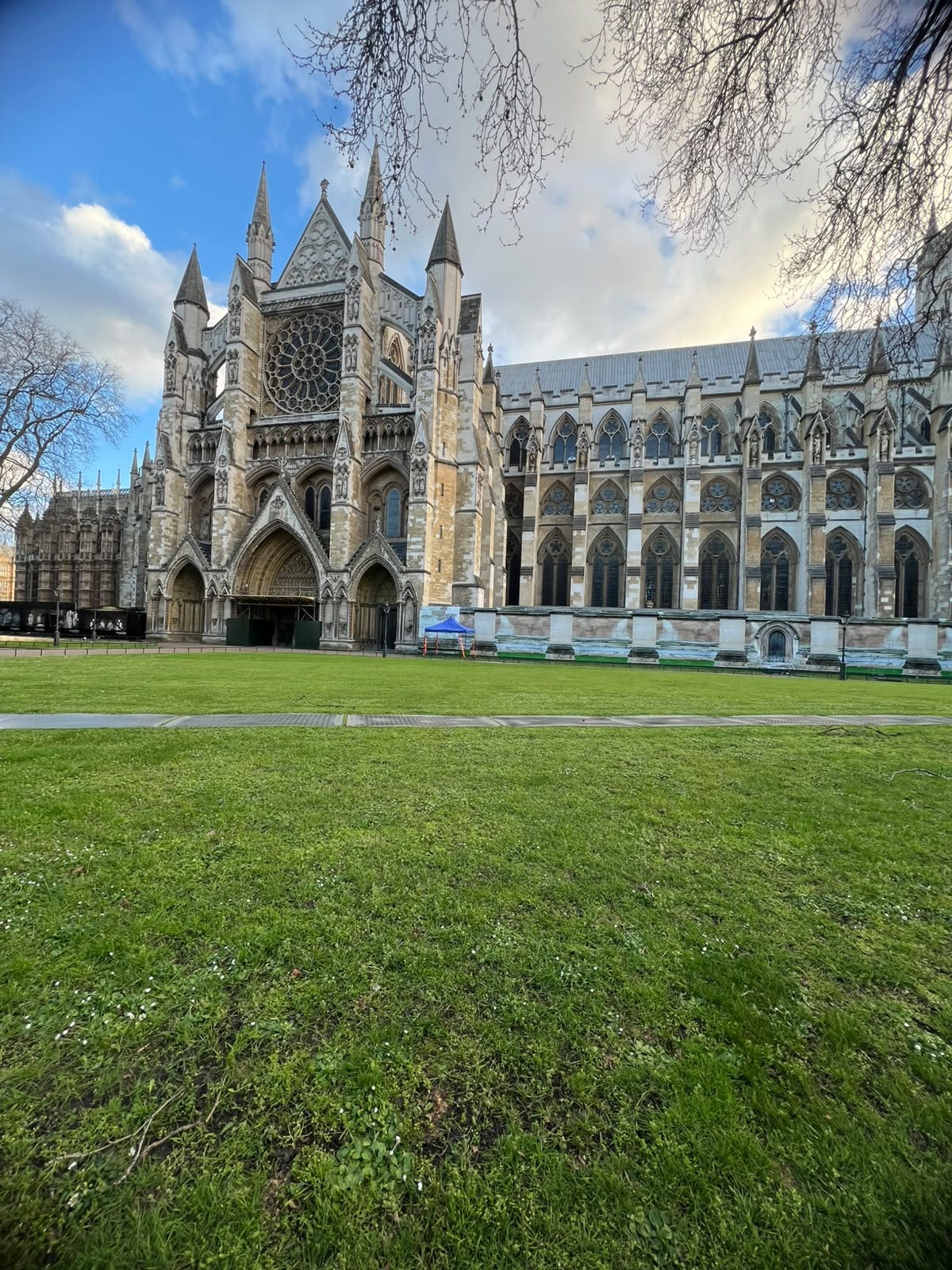
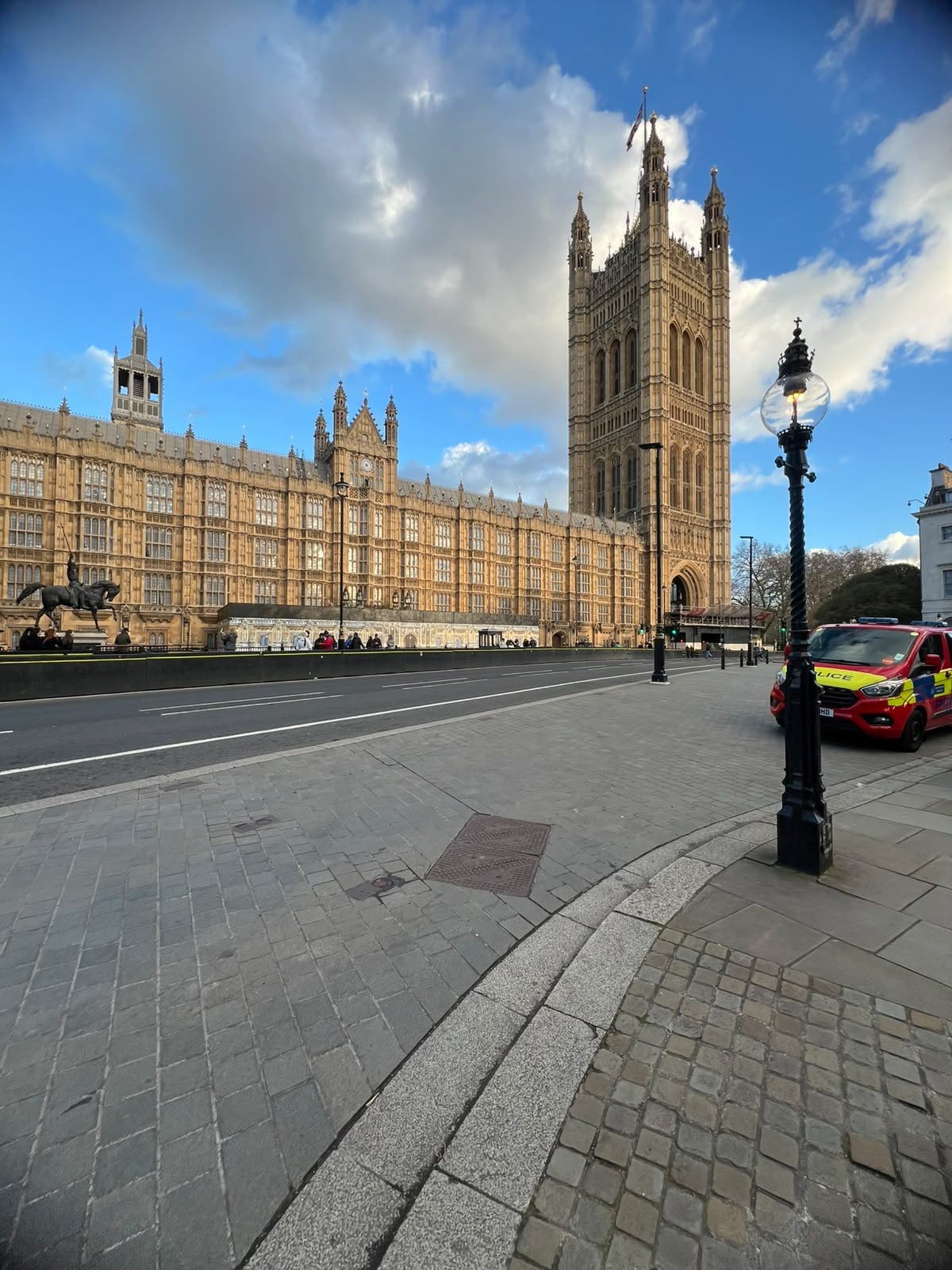
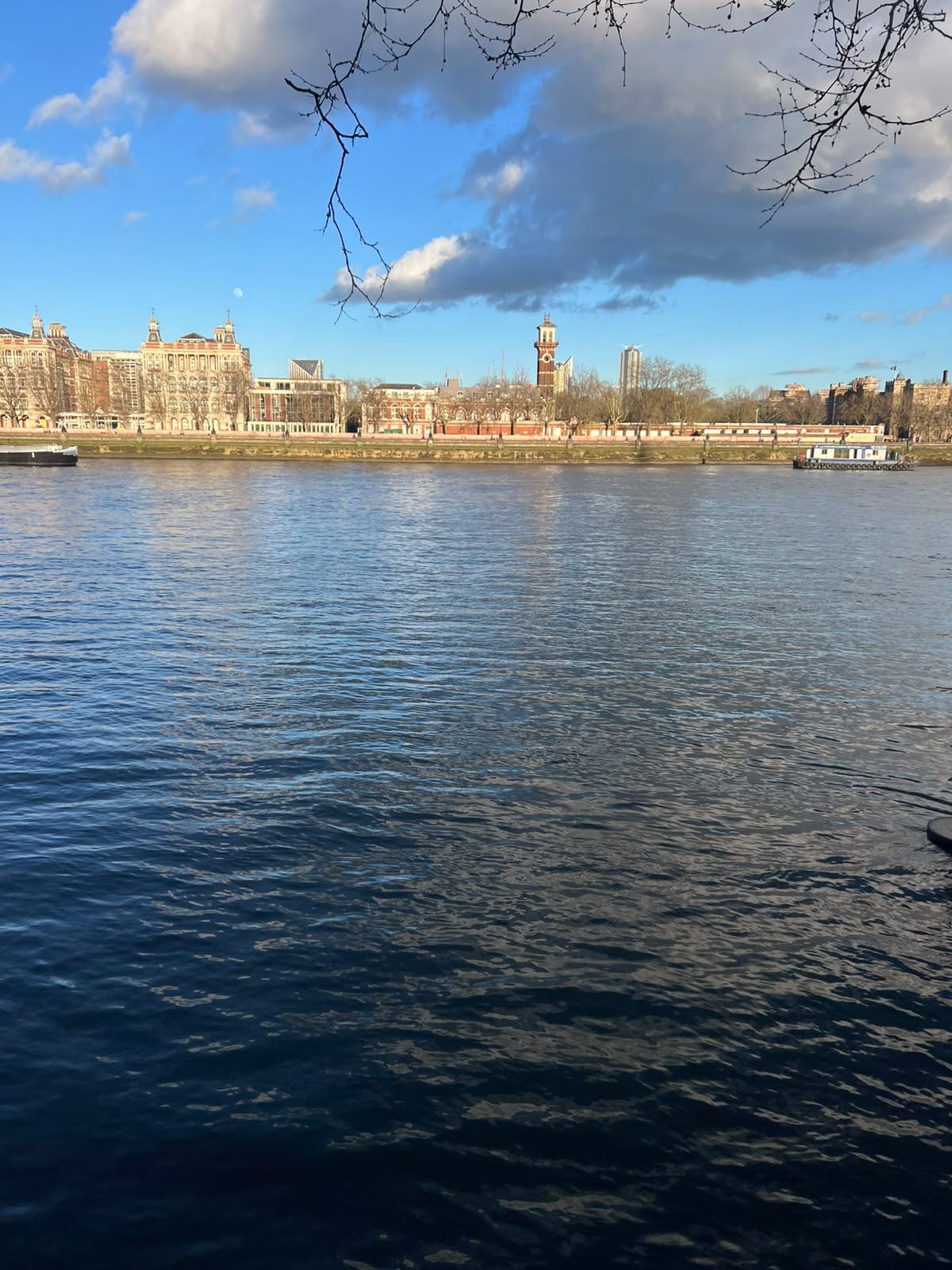
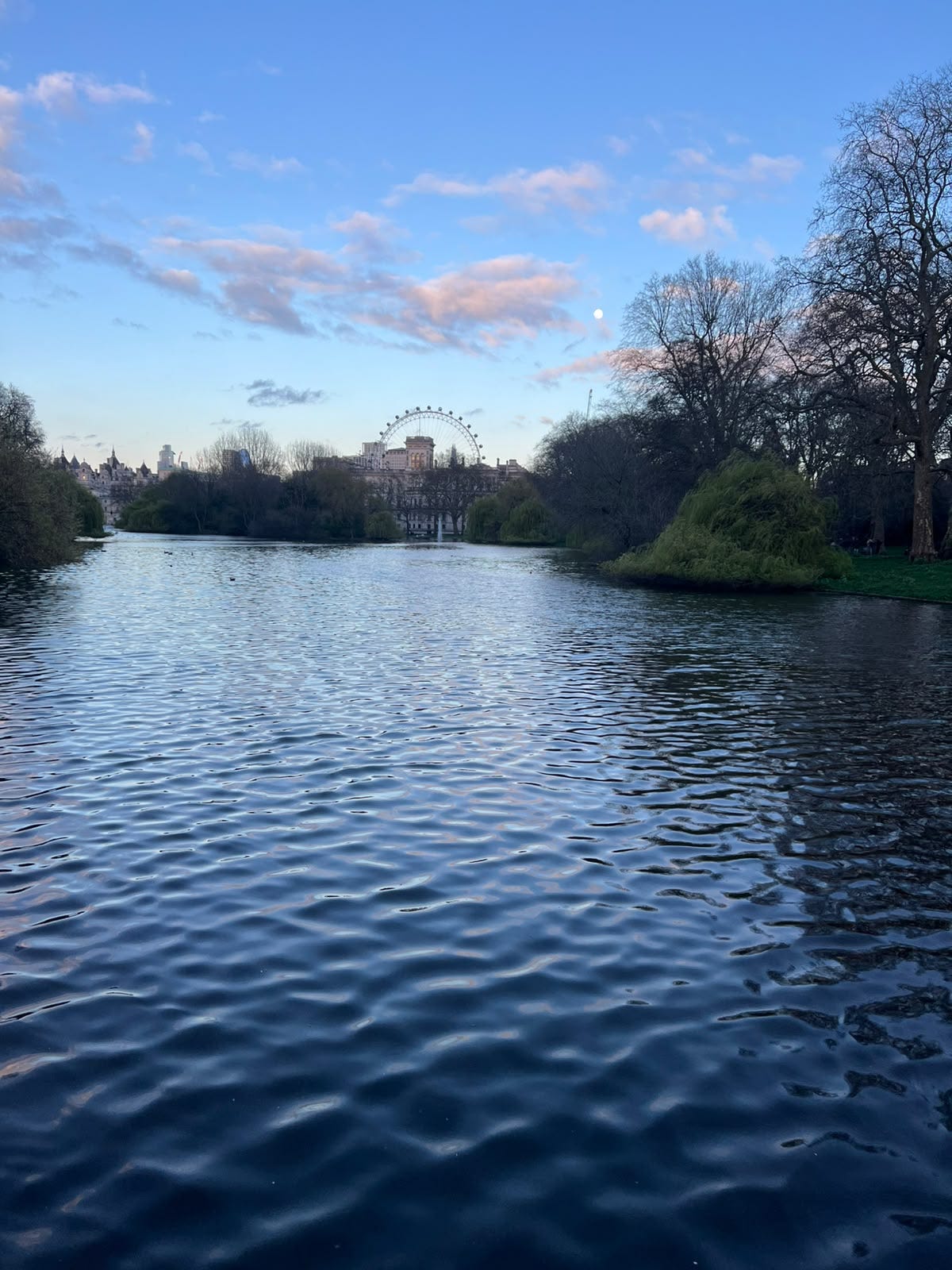
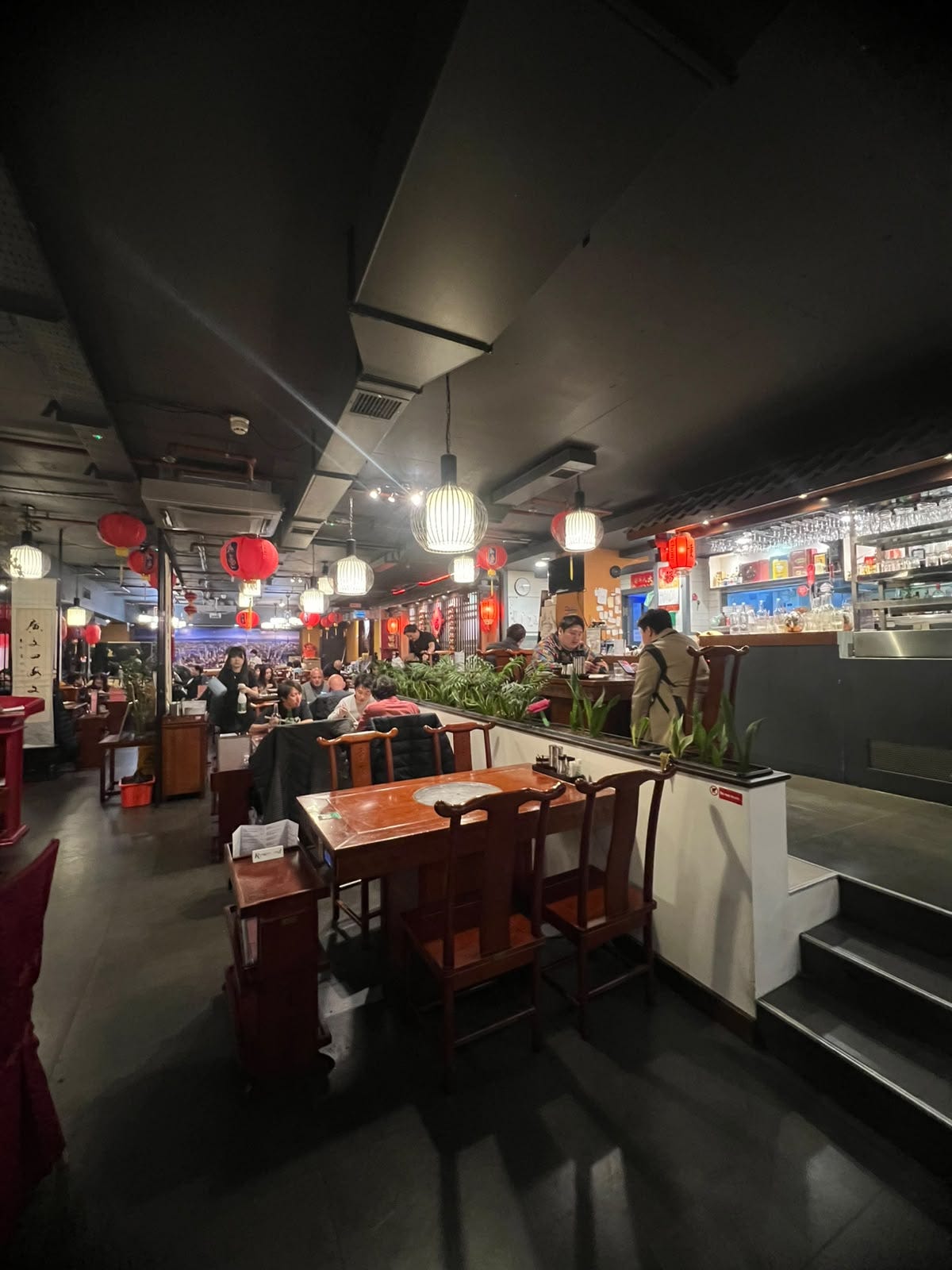
Dinner was Taste of Chongqing, tucked into Bloomsbury, all red lanterns and a wall mural of a man fanning fish over an open flame, which turned out to be exactly what arrived at the table, spicy Sichuan chicken with enough heat to make the lanterns feel like a warning rather than decoration.
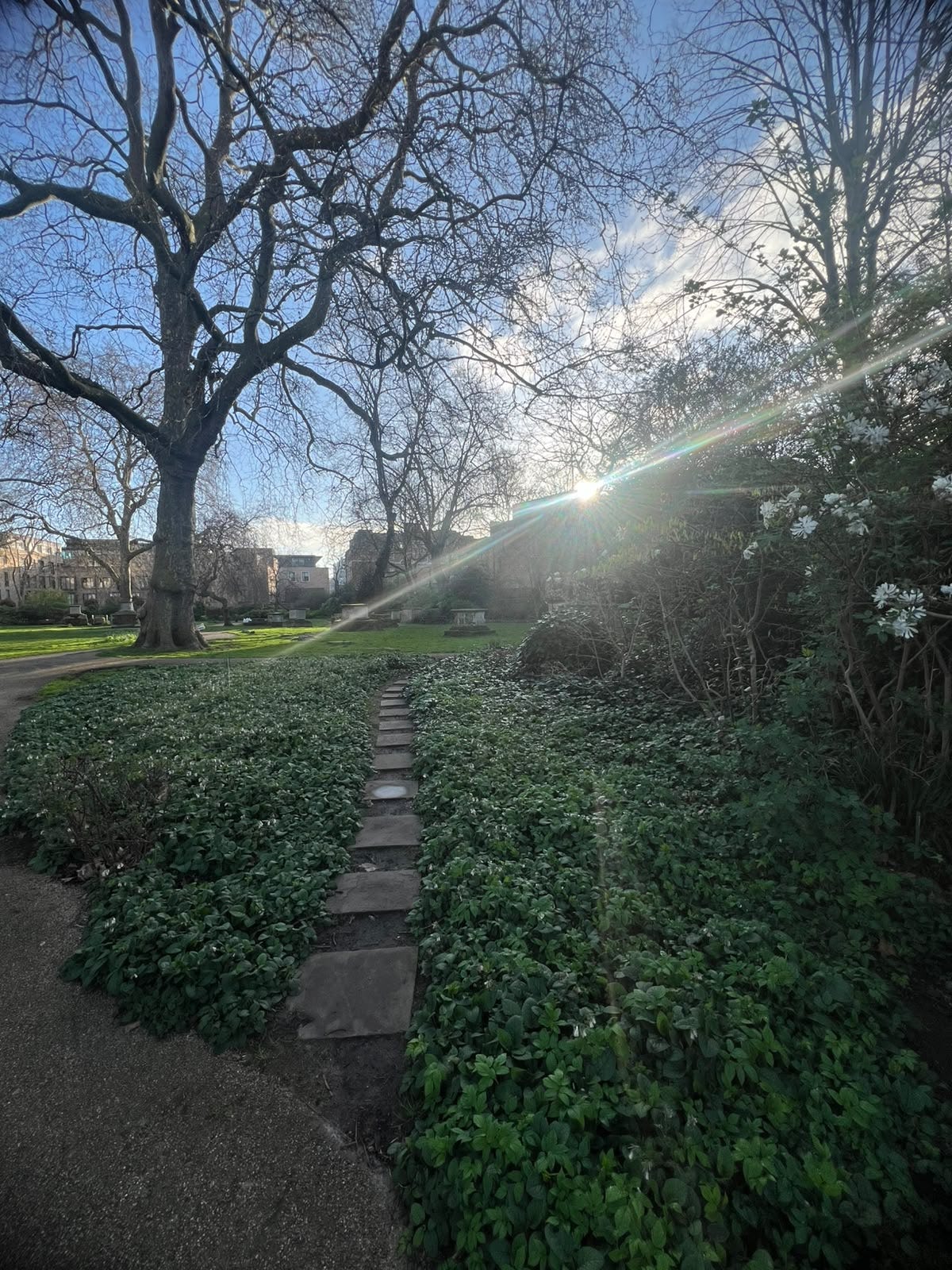
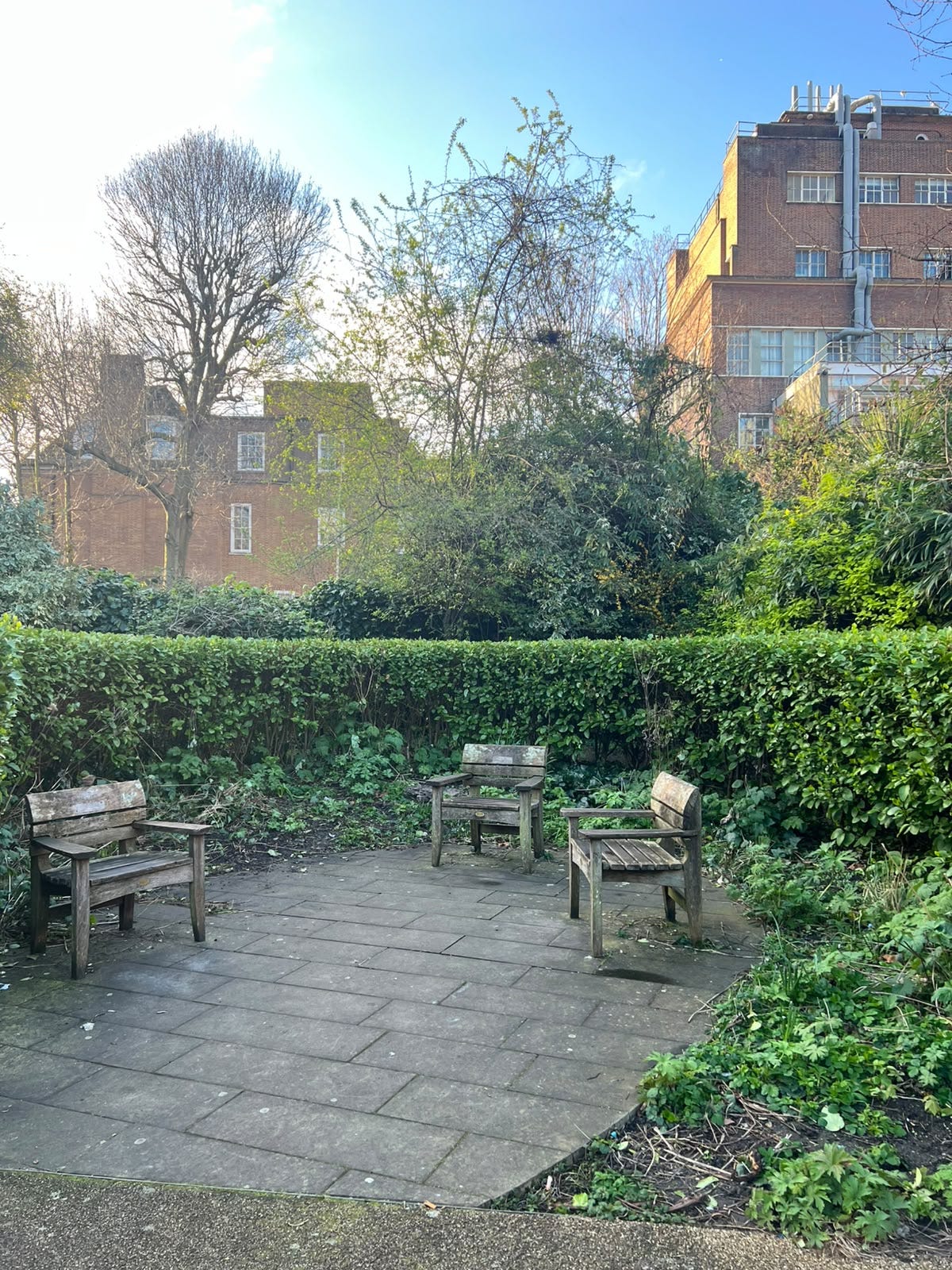
The last morning began at St George’s Gardens, a small Bloomsbury square with a surprisingly large claim to fame, it was one of the very first burial grounds in London built away from a church entirely, laid out in 1713 and partly designed by the architect Nicholas Hawksmoor. Among the surviving tombs is that of Anna Gibson, who died in 1726, great granddaughter of Oliver Cromwell, the man who was formally offered the crown in 1657 and turned it down, which makes him the closest England ever got to a king who simply said no.
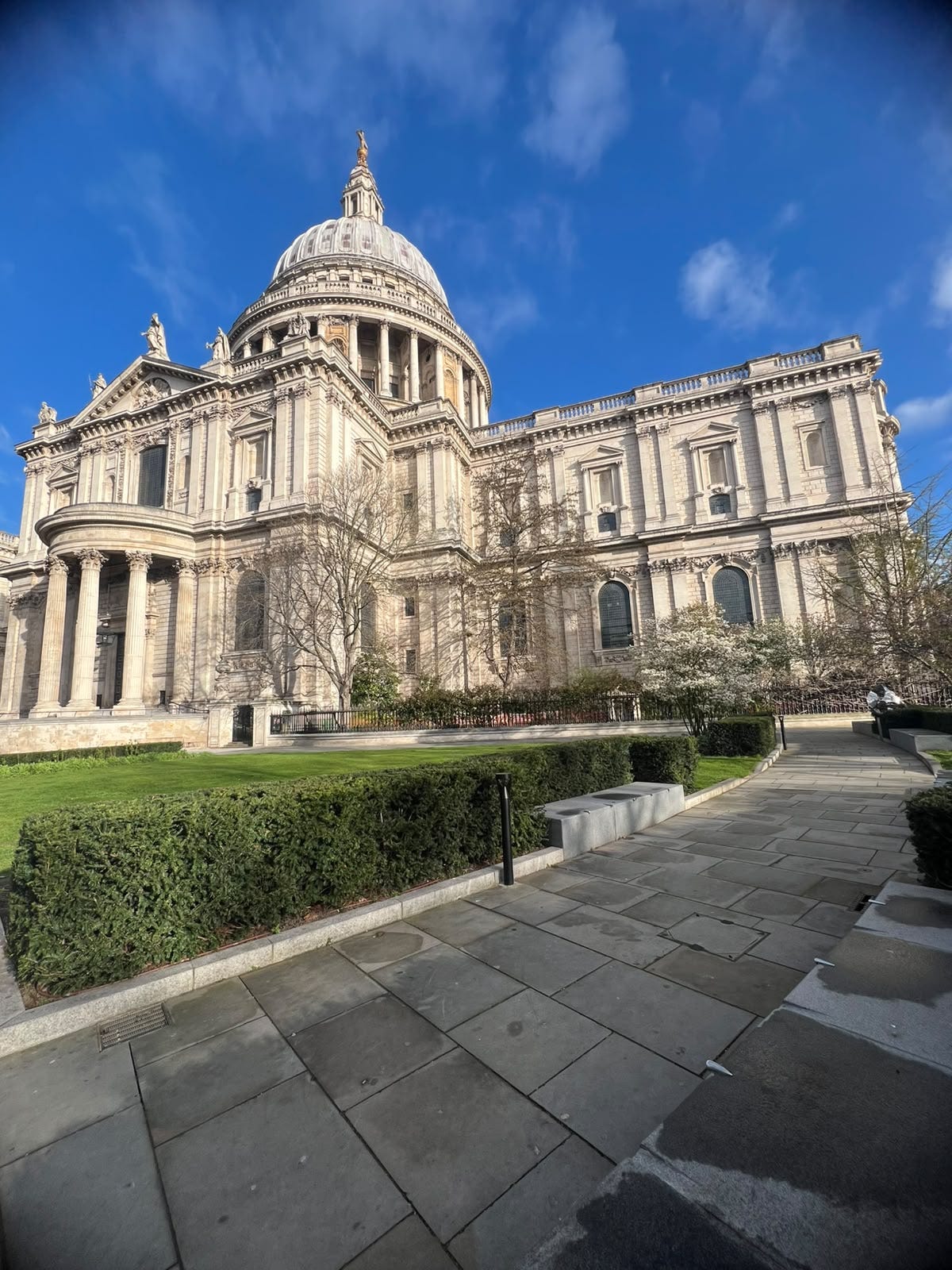
A bus ride later, St Paul’s Cathedral, a building I genuinely cannot get enough of, no matter the angle. Christopher Wren topped both west towers with gilded pineapples, which sounds whimsical until you remember pineapples were once so rare and expensive that people rented them as dinner party centrepieces rather than eat them, so two of them sitting permanently on a cathedral roof was, at the time, a genuinely extravagant flex.
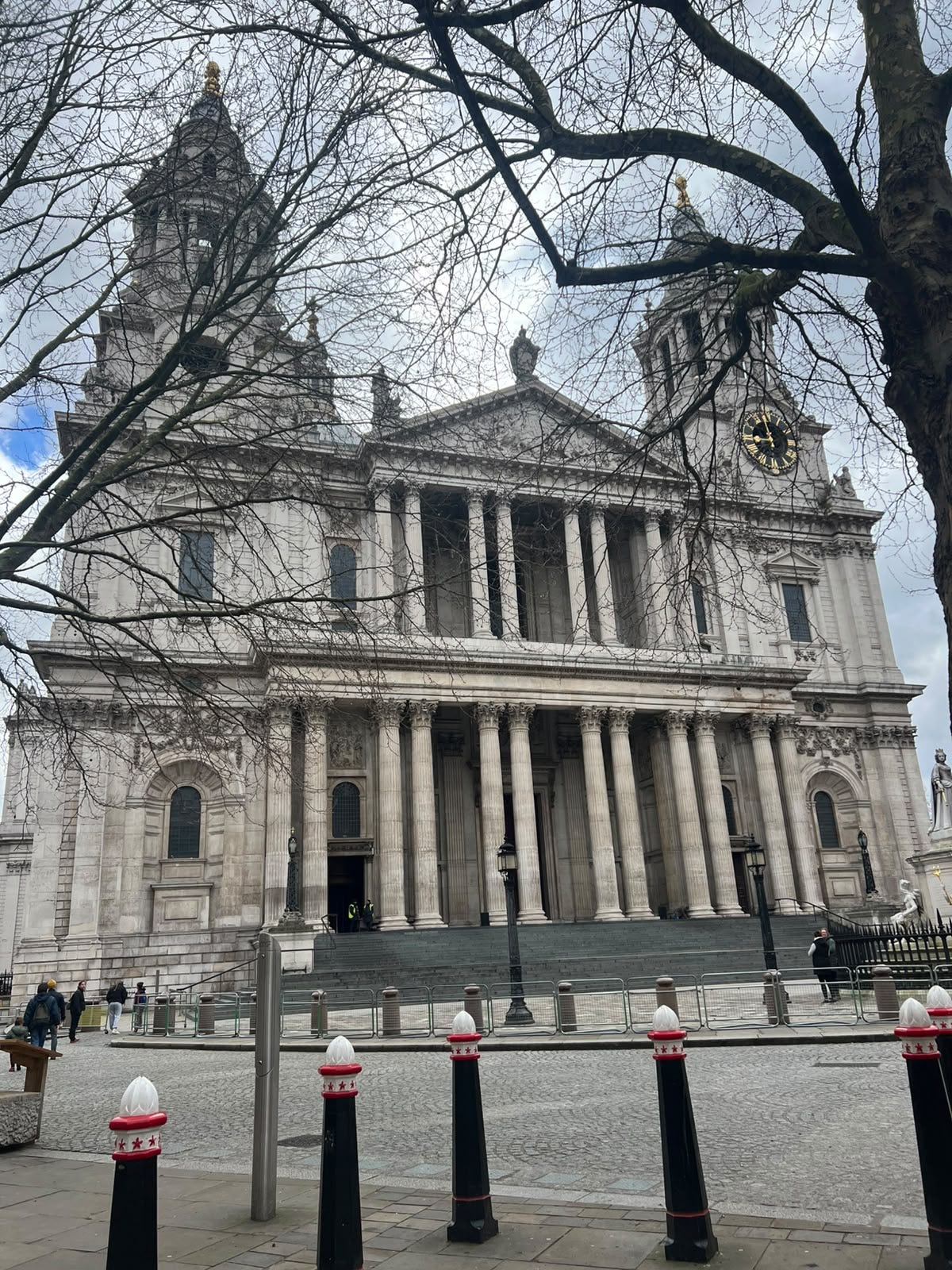
I attended the Sunday service that morning, and it was enriching in a way I did not expect walking in, stained glass windows doing exactly what they have done for centuries, making ordinary light feel like it is trying to tell you something.
Next up, a castle that might just be my favourite one on this entire trip, though its name stays locked away for now, a cemetery with absolutely no business looking this beautiful, and a few nights actually sleeping inside a manor in Kent, because apparently this trip was never going to end quietly. And since the honest answer is that this UK series is nowhere near done, let me say it plainly, it is not wrapping up in three or four newsletters. This trip earned more than that, and rushing it would not be fair to it, or to you.
Your resident castle and cardamom enthusiast,
Arpita