
Thank you first, properly, before any of this starts. What began as a food and travel newsletter has quietly turned into something closer to a shared diary by this point, bench tangents, pineapple trivia and all, and the fact that you keep opening these every single time still is not something I take lightly. This one picks up exactly where the wait left off, a few more corners of Kent and north London that earned more room than a rushed mention would have given them.
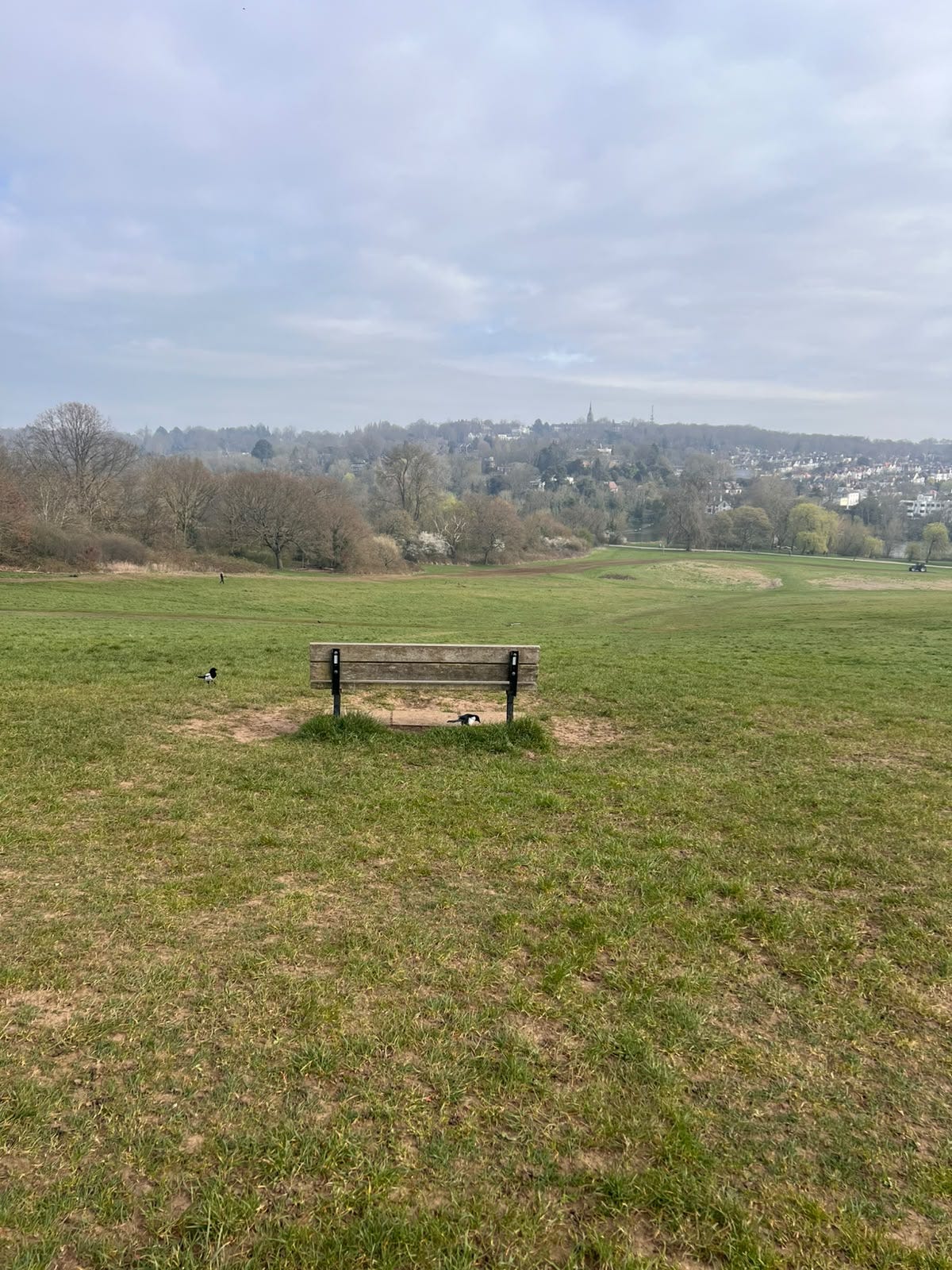
It started on Parliament Hill, on Hampstead Heath, ninety eight metres above the city with nothing blocking the view, St Paul’s dome included, protected by law from ever being built out of that skyline. The very top goes by Kite Hill locally, not for any grand historical reason, simply because the wind up there is reliable enough that the sky above it fills with kites on any half decent weekend. I found a bench, because I am always going to find a bench, sat, thought, scribbled a few lines, the usual. This particular stretch of grass nearly became Victorian housing until a formidable campaigner named Octavia Hill helped raise the money to save it, so in a very real sense, my morning bench exists because a woman I never met refused to let the developers win.
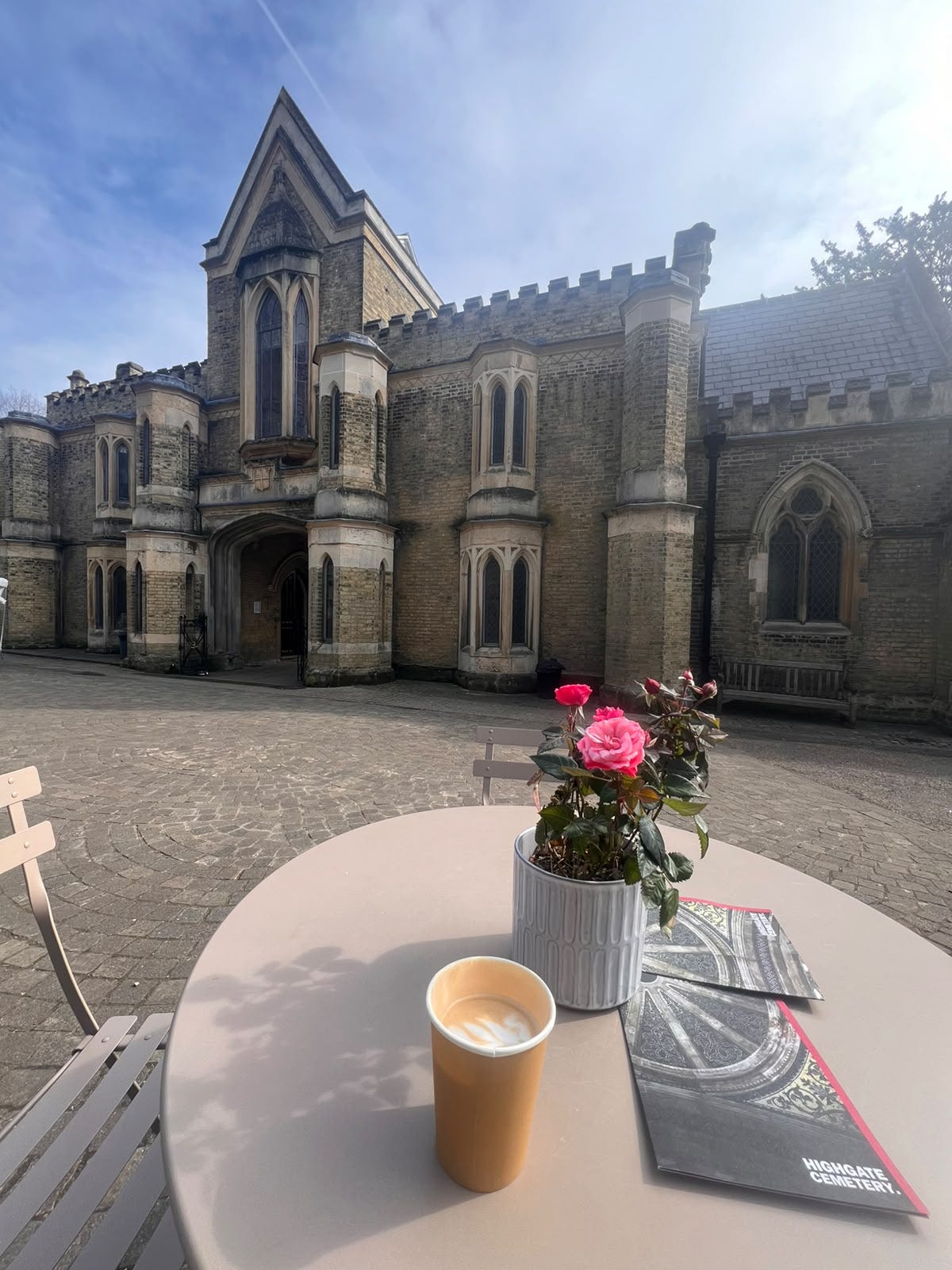
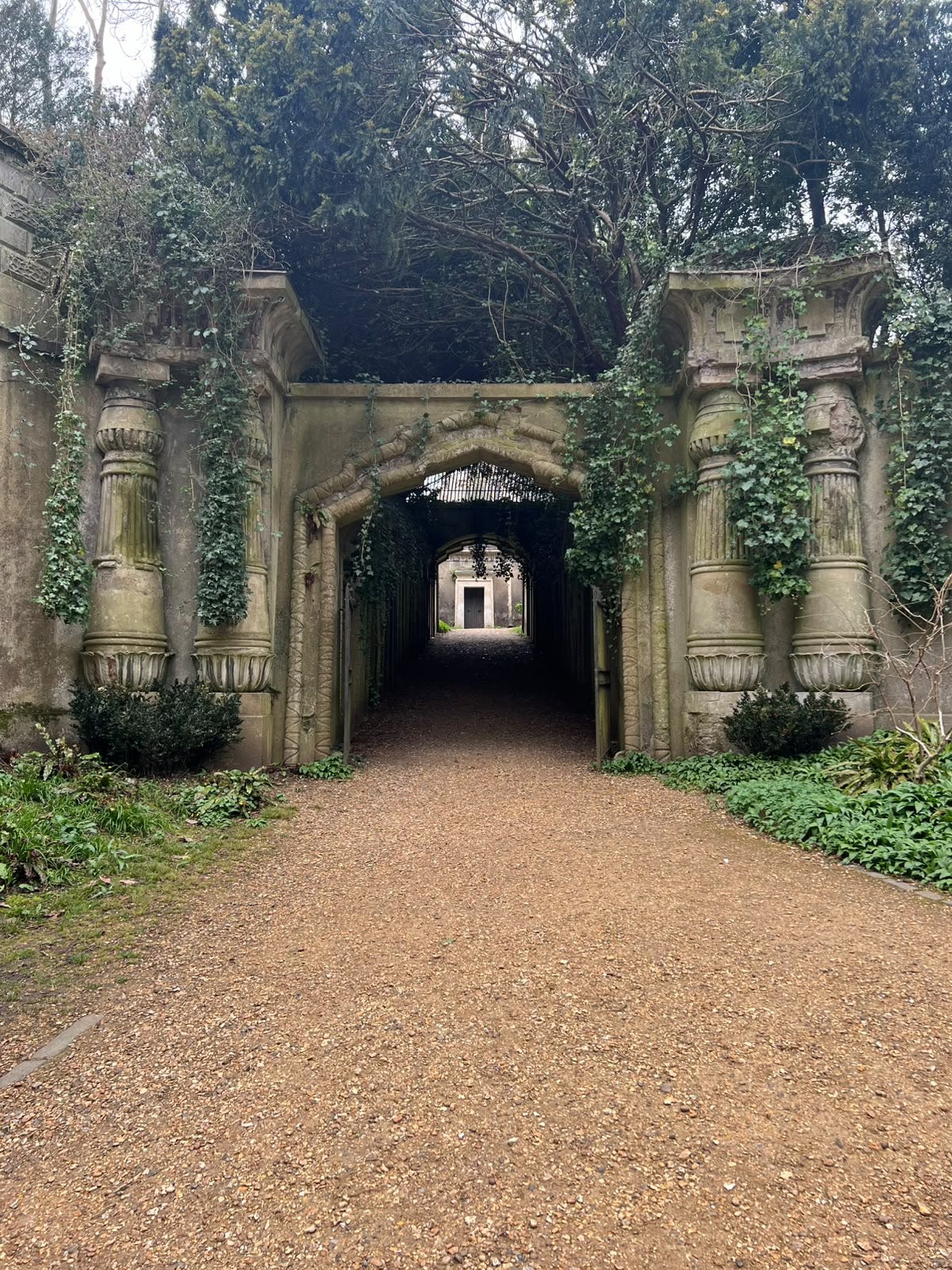
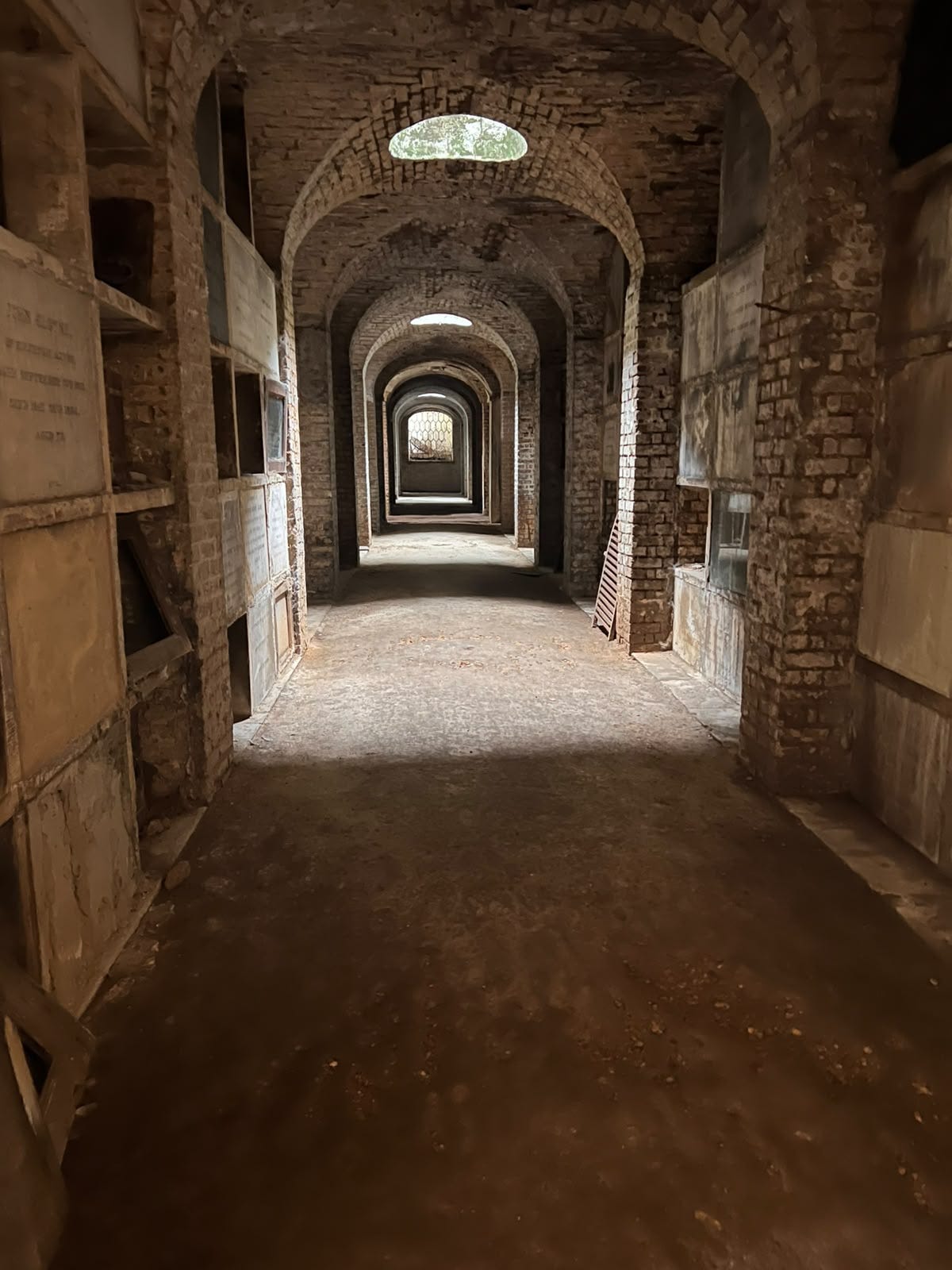
A coffee first, then through the gates of Highgate Cemetery, because some places deserve to be entered properly caffeinated. It opened in 1839, one of seven grand Victorian cemeteries built when London ran out of room for its dead, and remarkably, it is still an active burial ground rather than a museum behind glass. The guided tour walked us down the Egyptian Avenue, a corridor of columns and obelisks that has no business existing in a London suburb, into the Circle of Lebanon, a ring of catacombs built around a cedar tree that stood there for close to two hundred years before it finally had to come down in 2019.
Karl Marx has the loudest monument on site, a bronze bust on a granite plinth, moved to this exact spot in 1954 and formally unveiled in 1956, with fresh flowers still arriving at its base the day we visited. George Michael is close by, laid between his mother and his sister, and the cemetery is strict about it, no photographs of the grave at all. Douglas Adams gets a quieter corner, marked out by a jam jar of pens that fans keep topping up, a tribute that feels exactly right for a man who wrote an entire book about not panicking. And since this is landing close enough to Halloween to earn it, Highgate also spent the early seventies thoroughly convinced it had a vampire on the grounds, two rival self appointed vampire hunters feuding publicly over who got to deal with it, a mob breaking into the locked cemetery the night it made the news, and, in the end, nothing supernatural ever actually turned up.
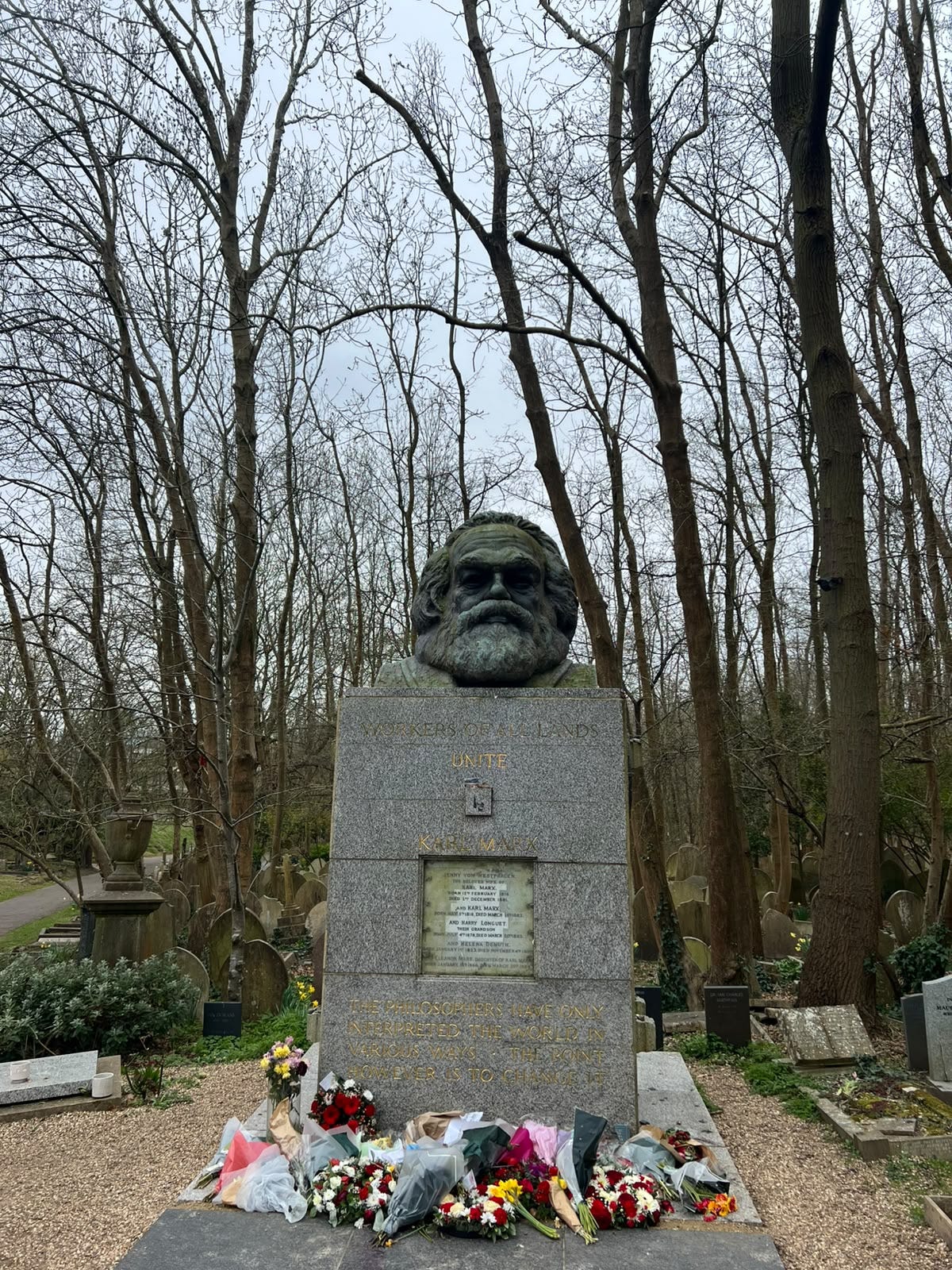
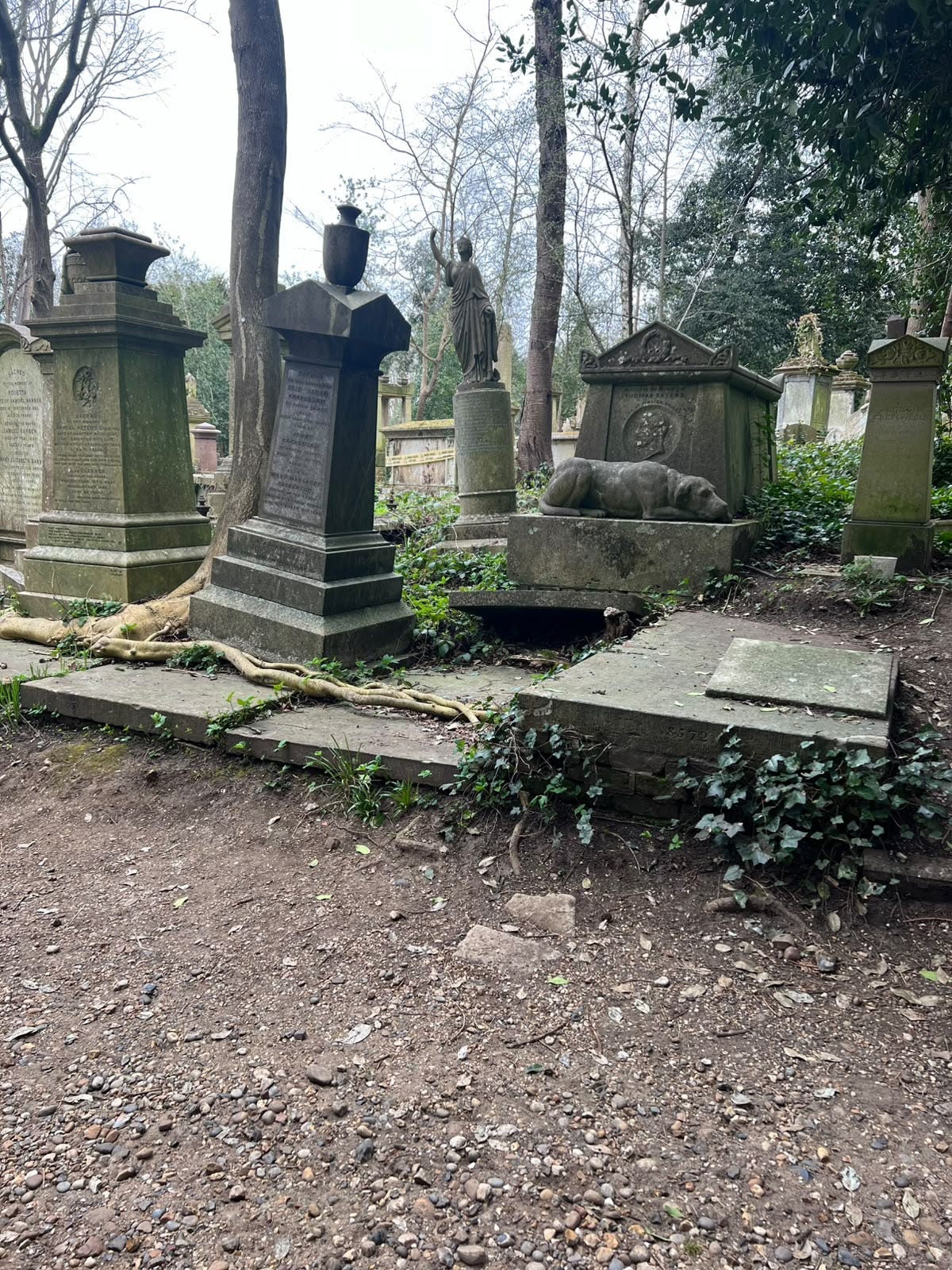
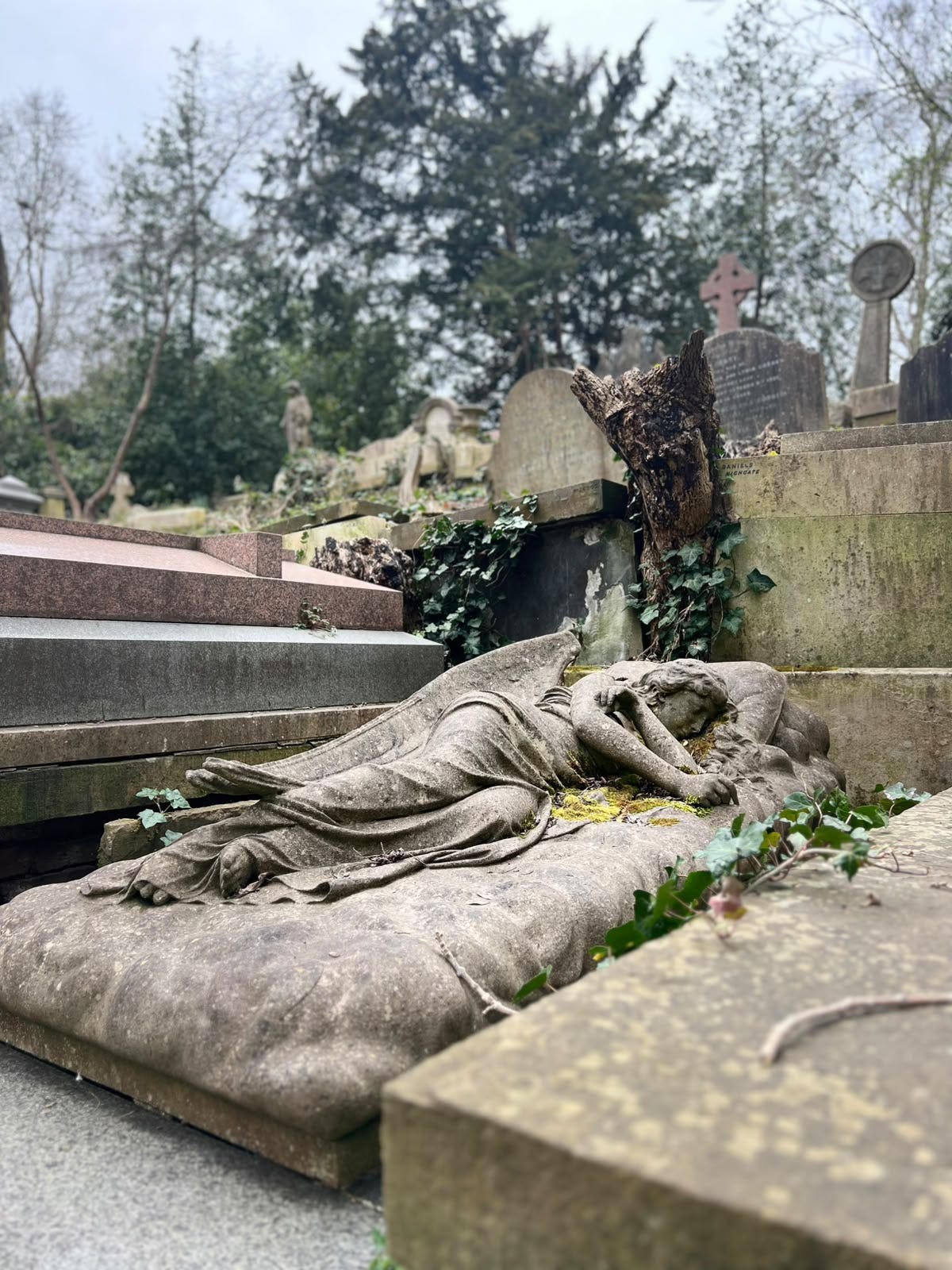
Walking between that many headstones does tend to put things in perspective, the obvious one, that everything ends eventually, and that whatever this particular now is, it might genuinely be all any of us gets. I did not rush that thought away, Highgate does not really let you rush anything. But a cemetery, however beautiful, is still only one stop in a day that had a bookshop waiting at the other end of it, and Piccadilly has its own quiet way of pulling a person back into the present.
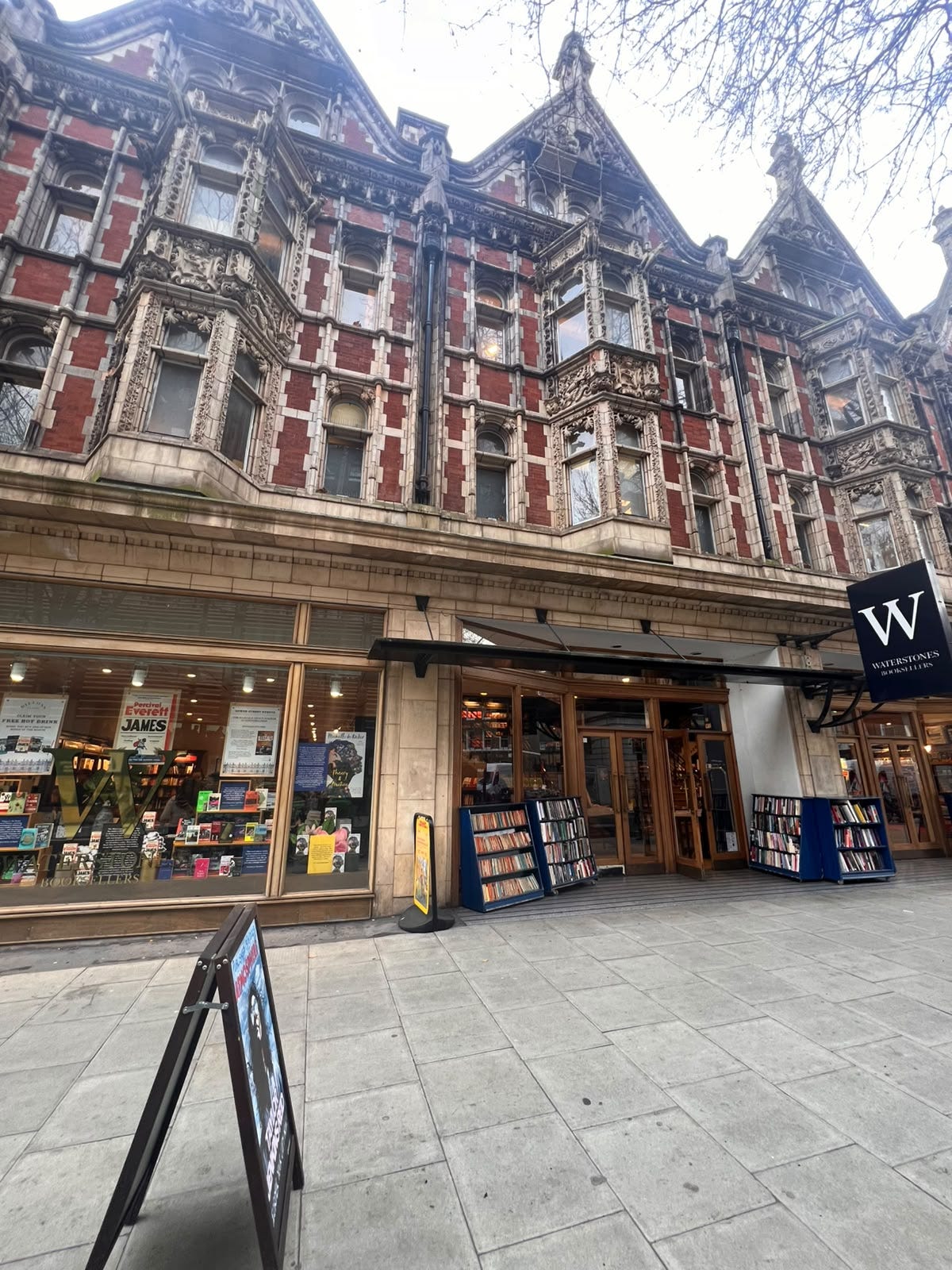
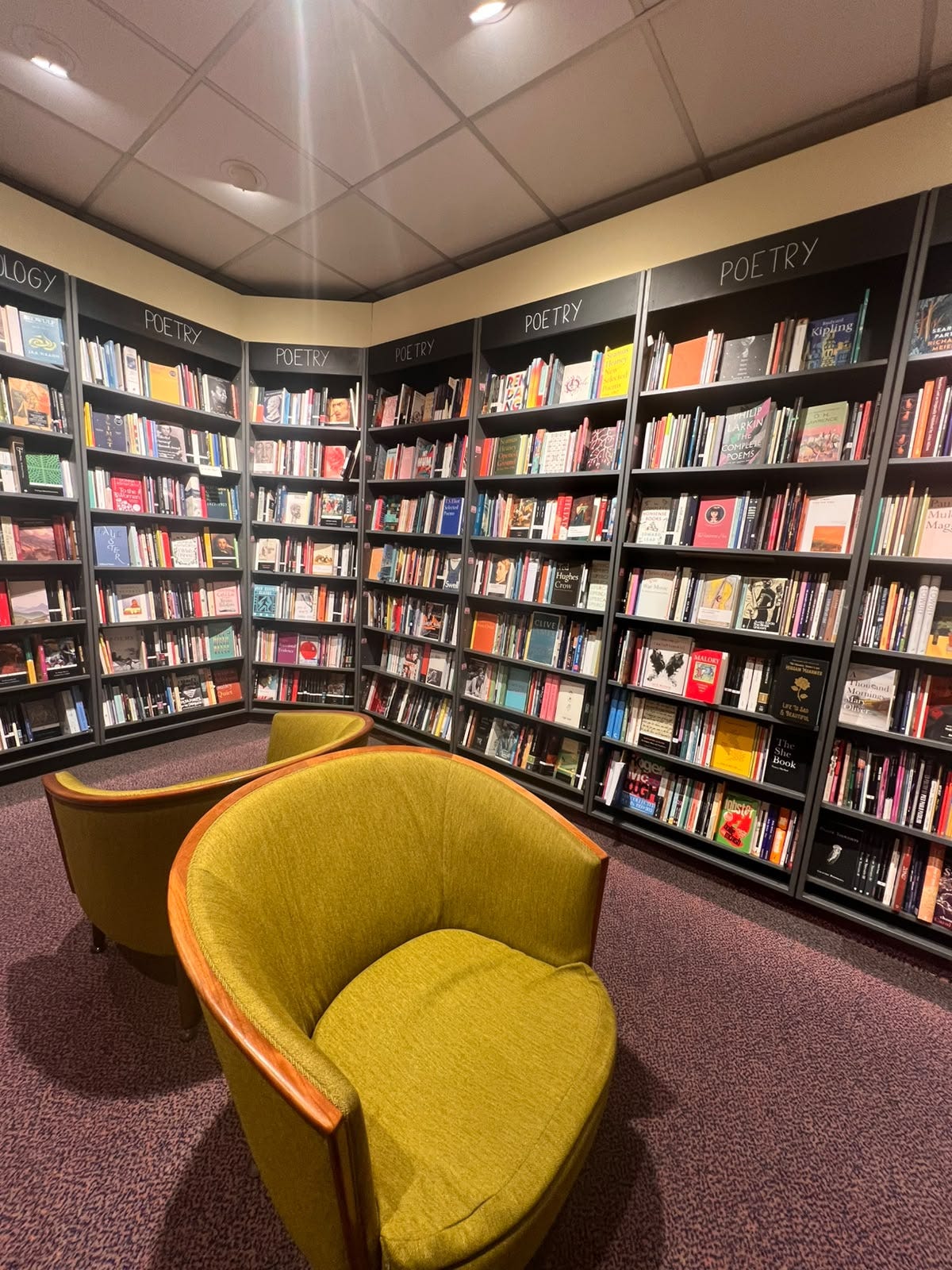
Waterstones on Piccadilly is not just any bookshop, it is Europe’s largest one, housed in a building that started life as Simpsons of Piccadilly, a menswear store so determined to outshine its rival across the road that it hired an architect willing to wrap the whole building in glass and Portland stone instead of hiding behind a traditional facade. It became a listed Waterstones in 1999 and never looked back. I found the poetry room, picked up a few books for myself, and left with an armful of gifts besides, a couple of them for two little girls I know who already have strong opinions about their bookshelves.
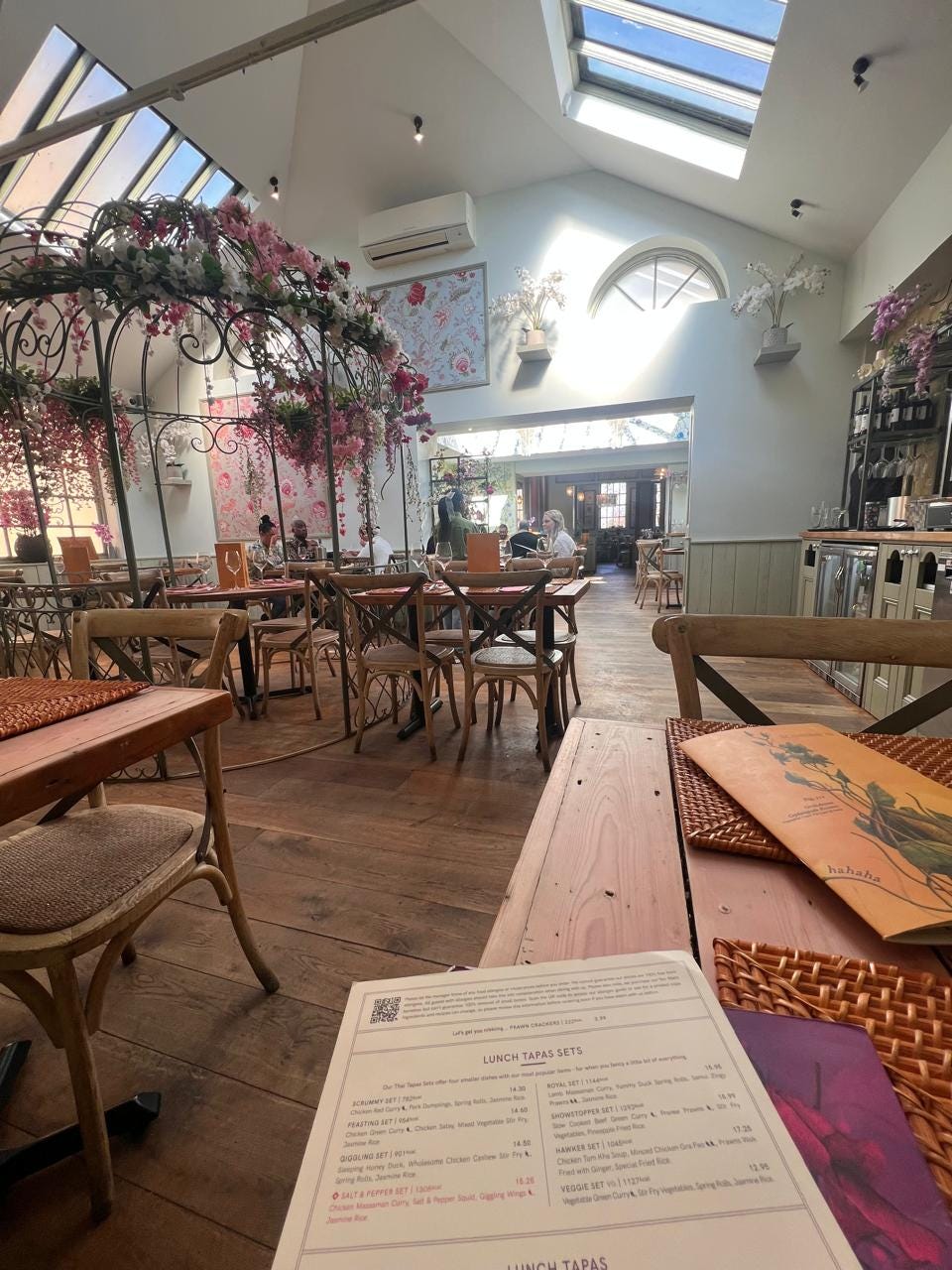
The next day was for getting to Bickley properly, a train out of the city, lunch first in Chislehurst at Giggling Squid, a Thai restaurant chain that began, rather improbably, in a tiny fisherman’s cottage in Brighton about two decades ago. I went for the Salt and Pepper Set, chicken massaman curry, salt and pepper squid, and a side of their giggling wings, the kind of lunch that makes an afternoon feel fully earned, though the only photograph I actually have is of the restaurant itself, all pink blossom and skylights, because apparently I am a details person before I am a food photographer.
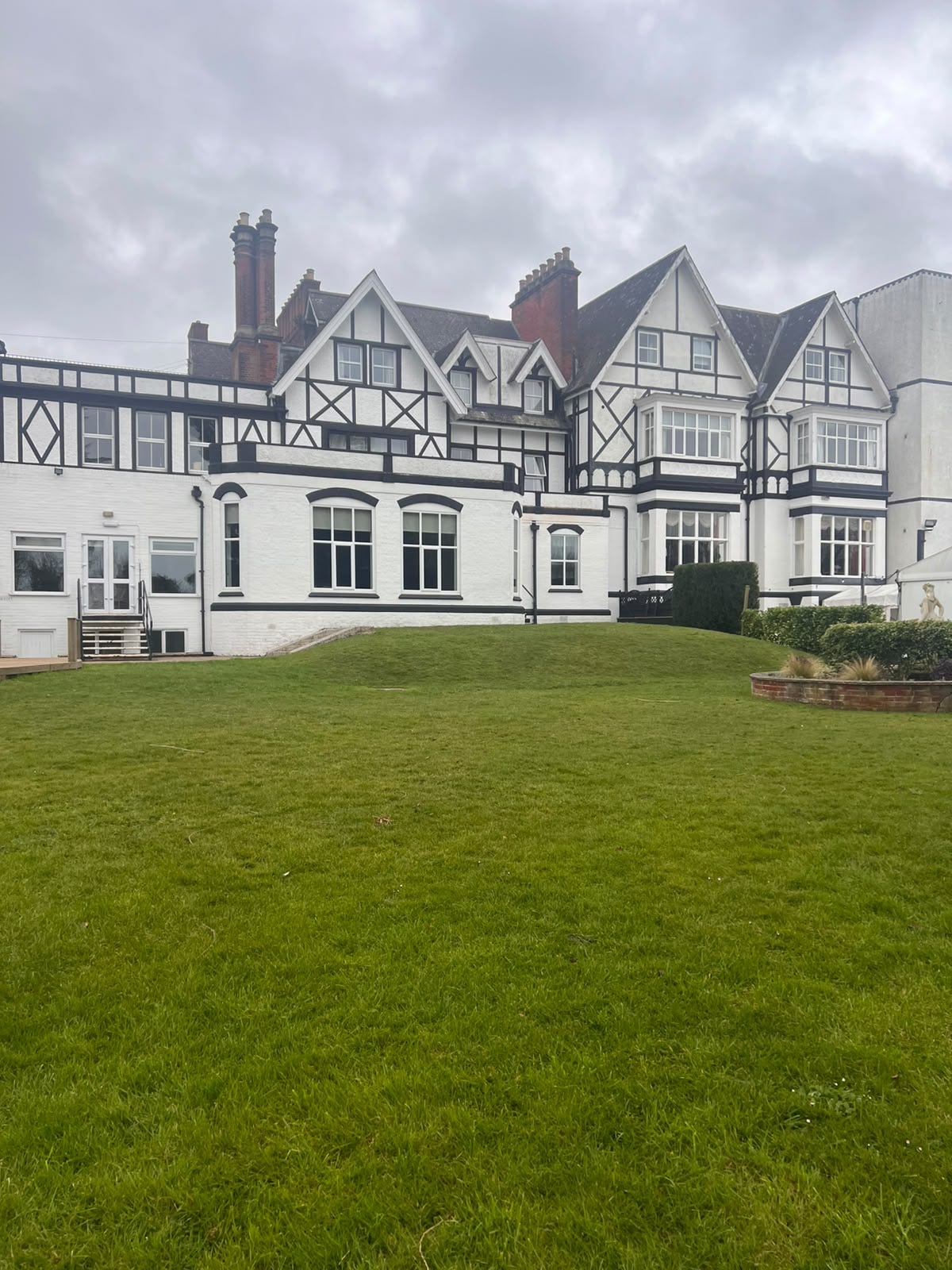
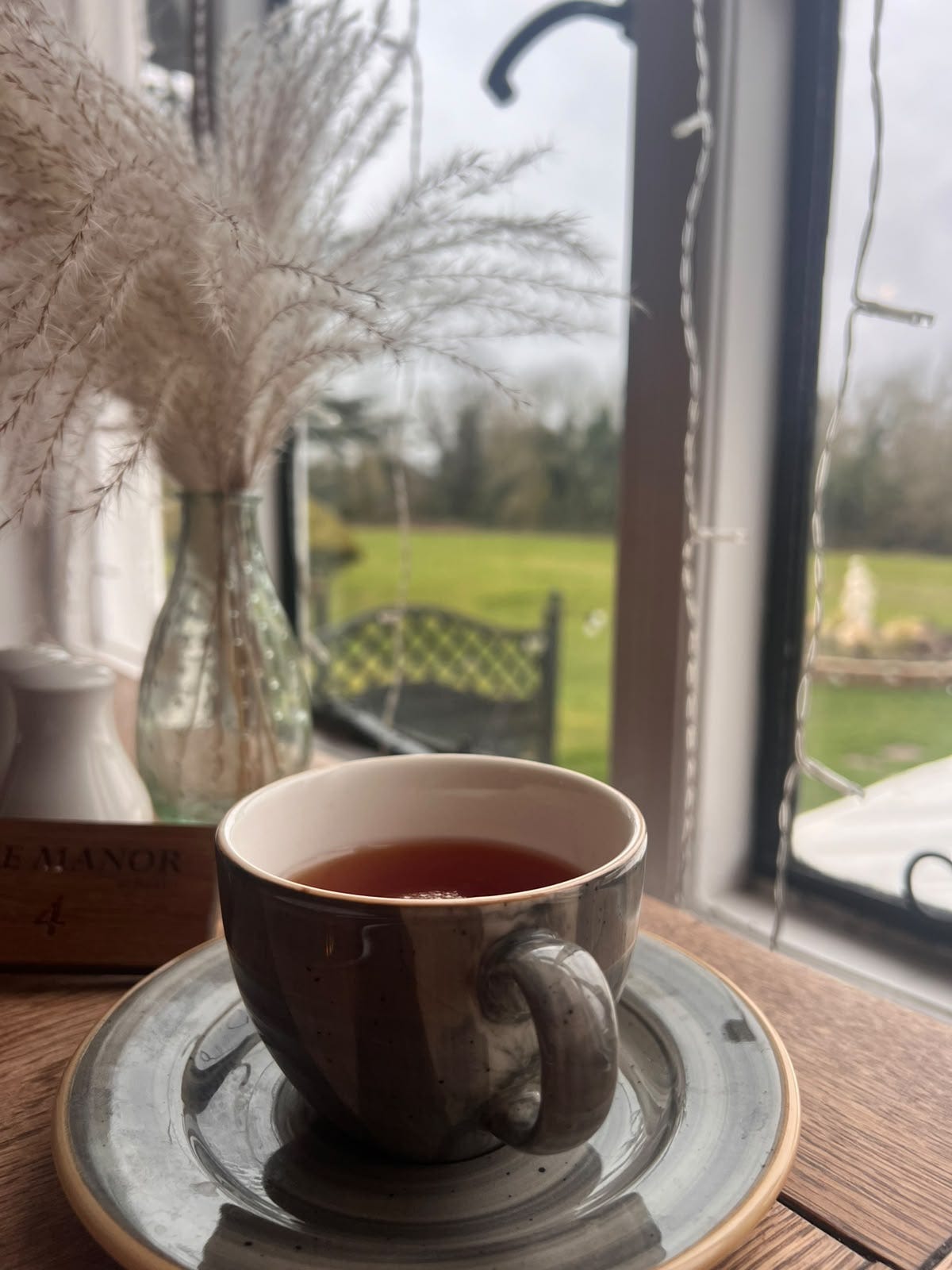
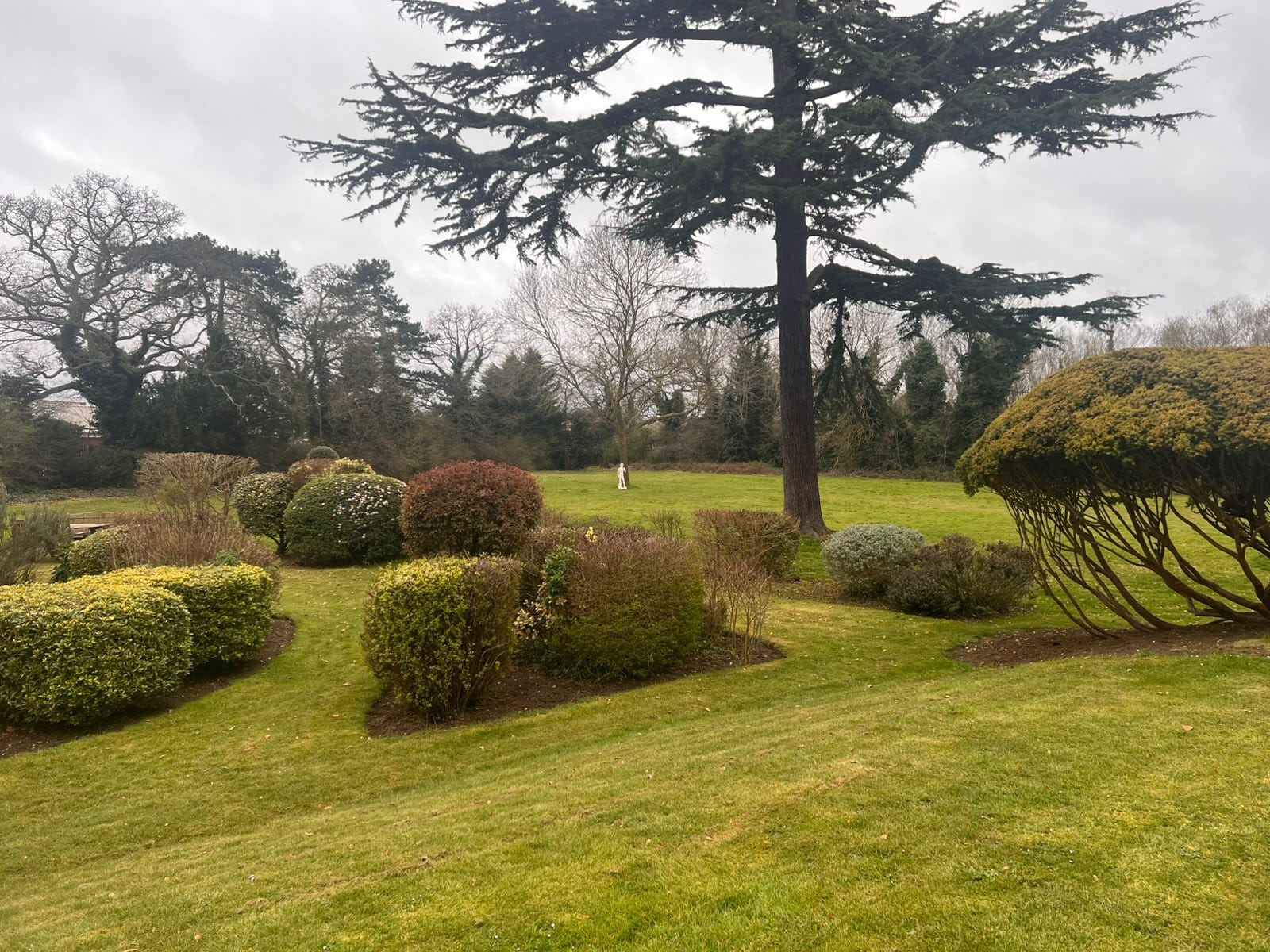
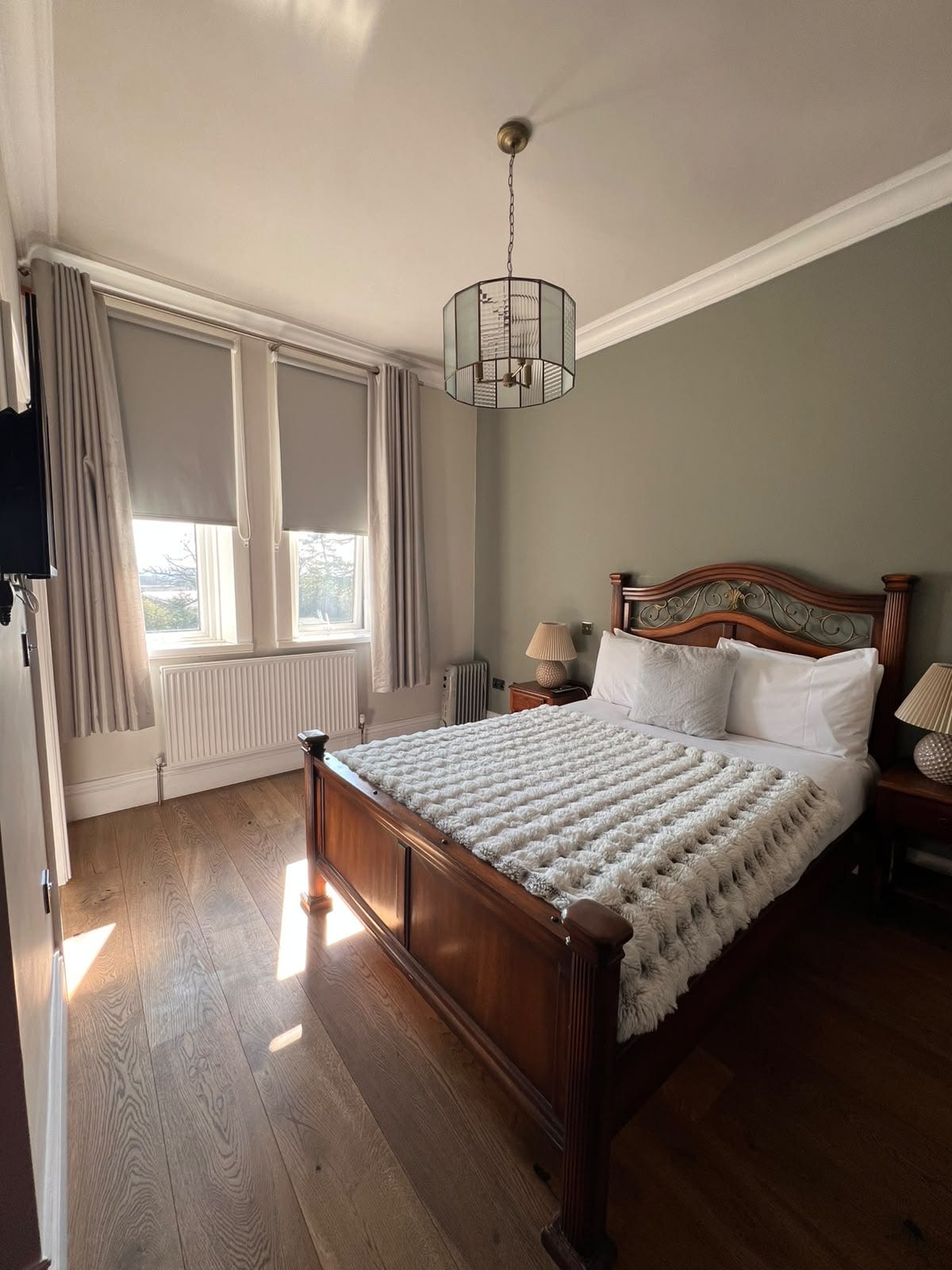
Then on to The Manor, a grand black and white house from the era when this corner of Kent was first being laid out as a proper Victorian escape from London. A few nights there were enough to spoil me slightly, tea in a window seat, a room with more character than most hotels bother with, and a lawn out back so lush and relentlessly green it barely looked real, the kind of lawn the staff mentioned hosts weddings all summer, which tracked completely once I actually saw it.
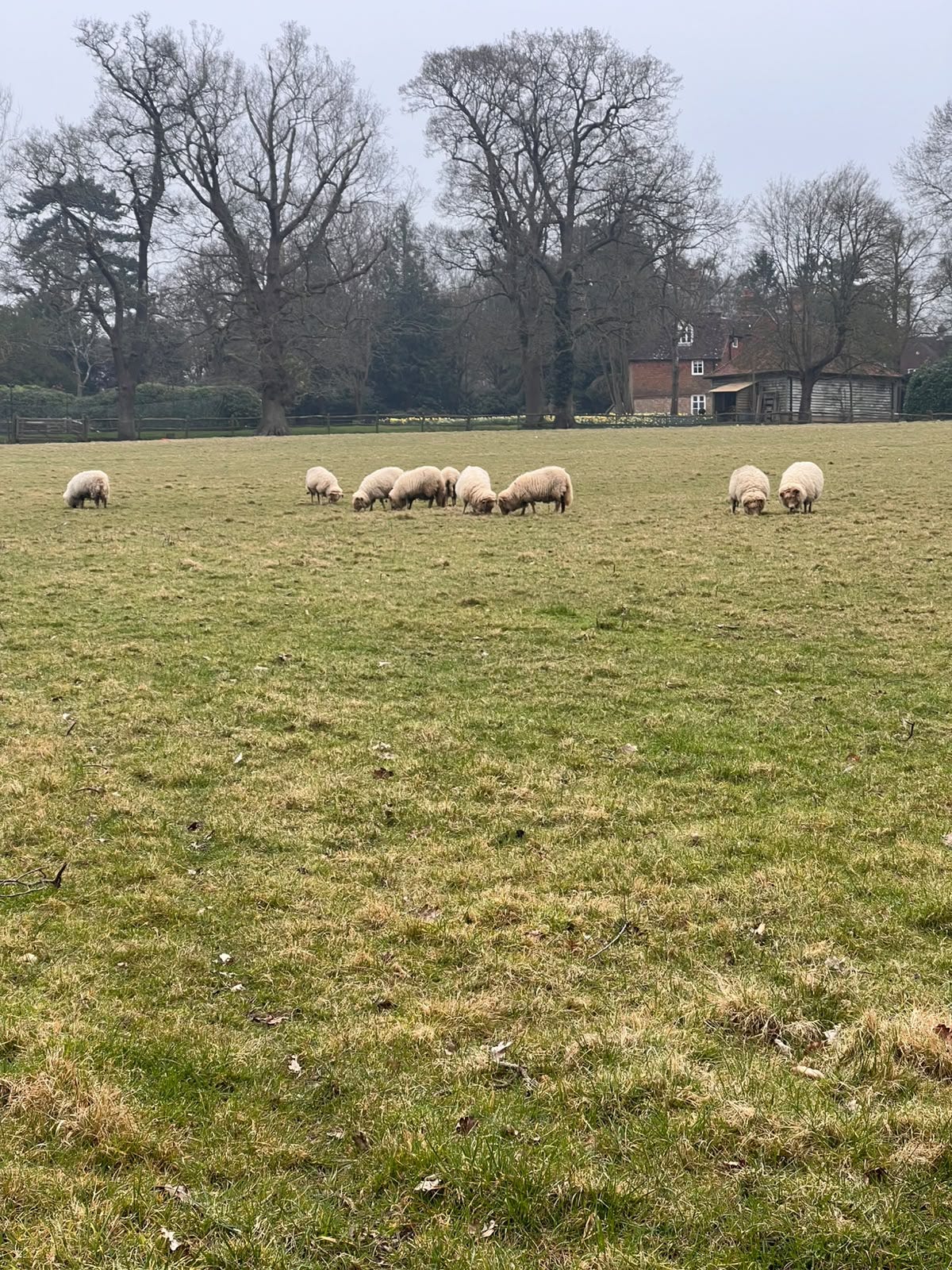
Hever Castle got its own full day, reached by train through fields with sheep grazing exactly like something out of a storybook, the kind of scene that makes you briefly forget you are still technically commuting. The castle itself started as a simple gatehouse and walled bailey in 1383, long before anyone had heard of the family who would make it famous. The Boleyns bought it the following century and modernised it into the comfortable manor house that raised Anne Boleyn, the woman whose refusal to settle for anything less than queen eventually cost Henry the Eighth his patience, his first marriage, and his membership of the Catholic Church, roughly in that order. After her execution the castle passed, almost unbelievably, to Anne of Cleves, wife number four, as part of her own divorce settlement, before drifting through quieter owners and slowly falling apart.
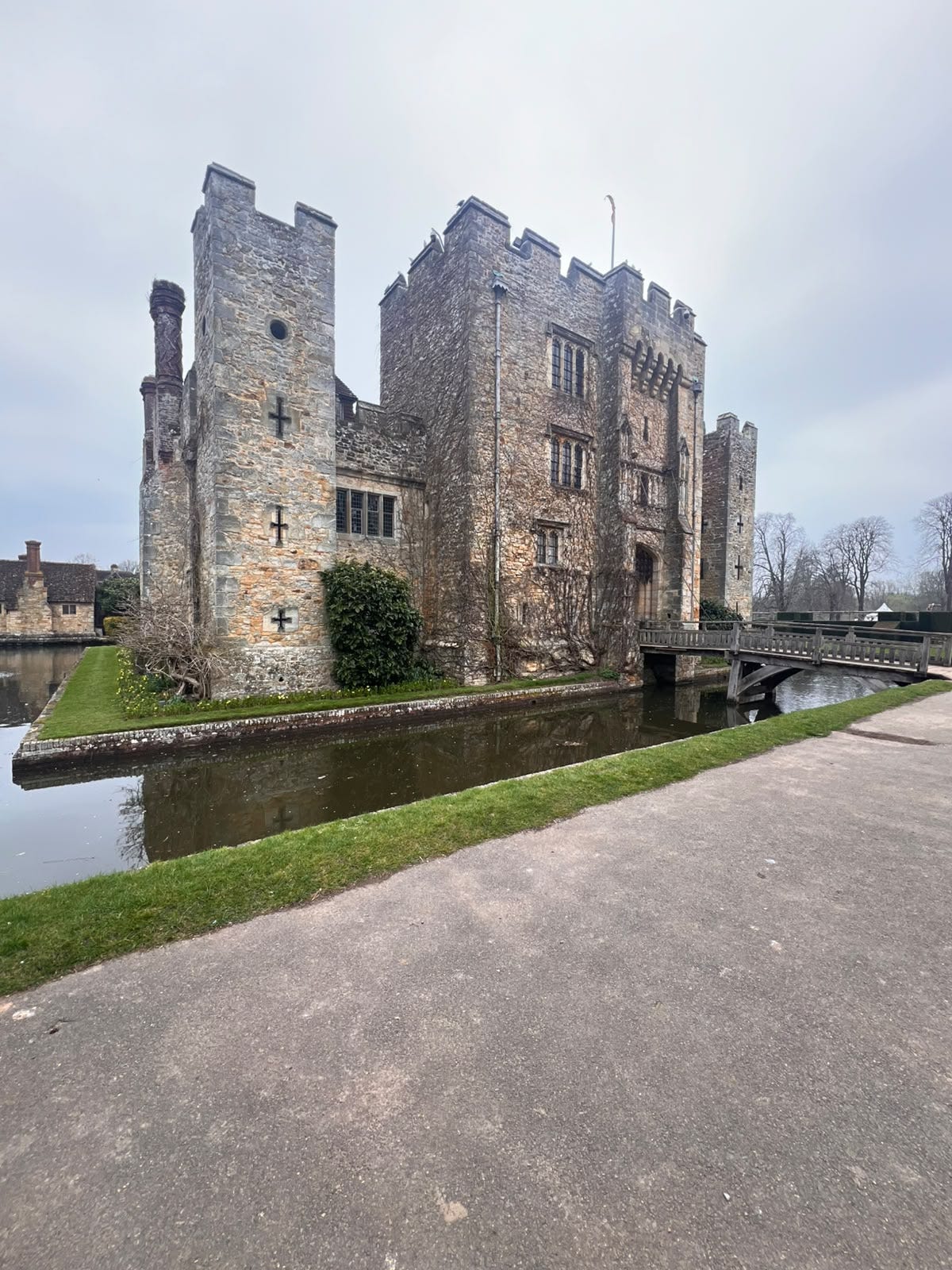
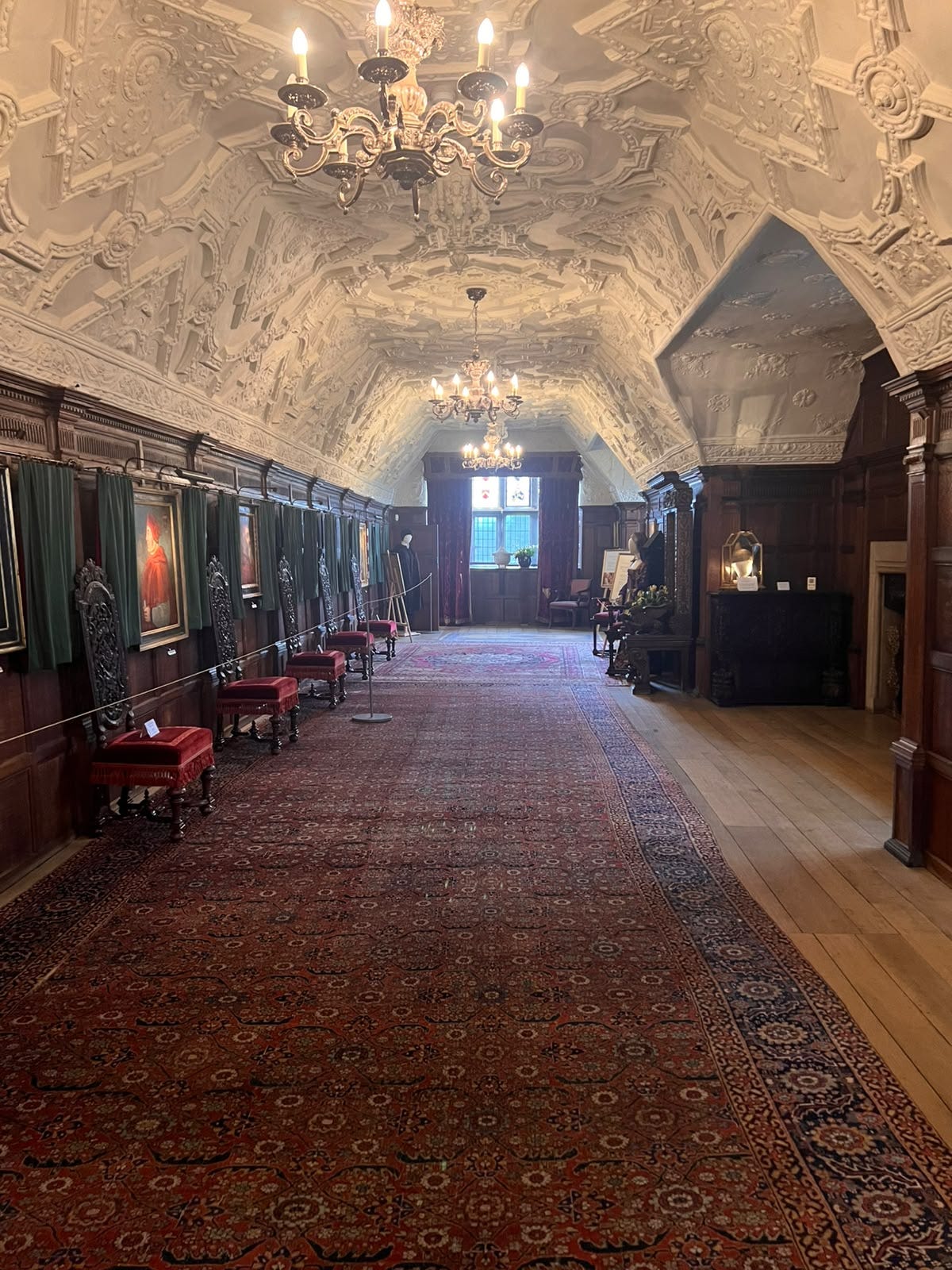
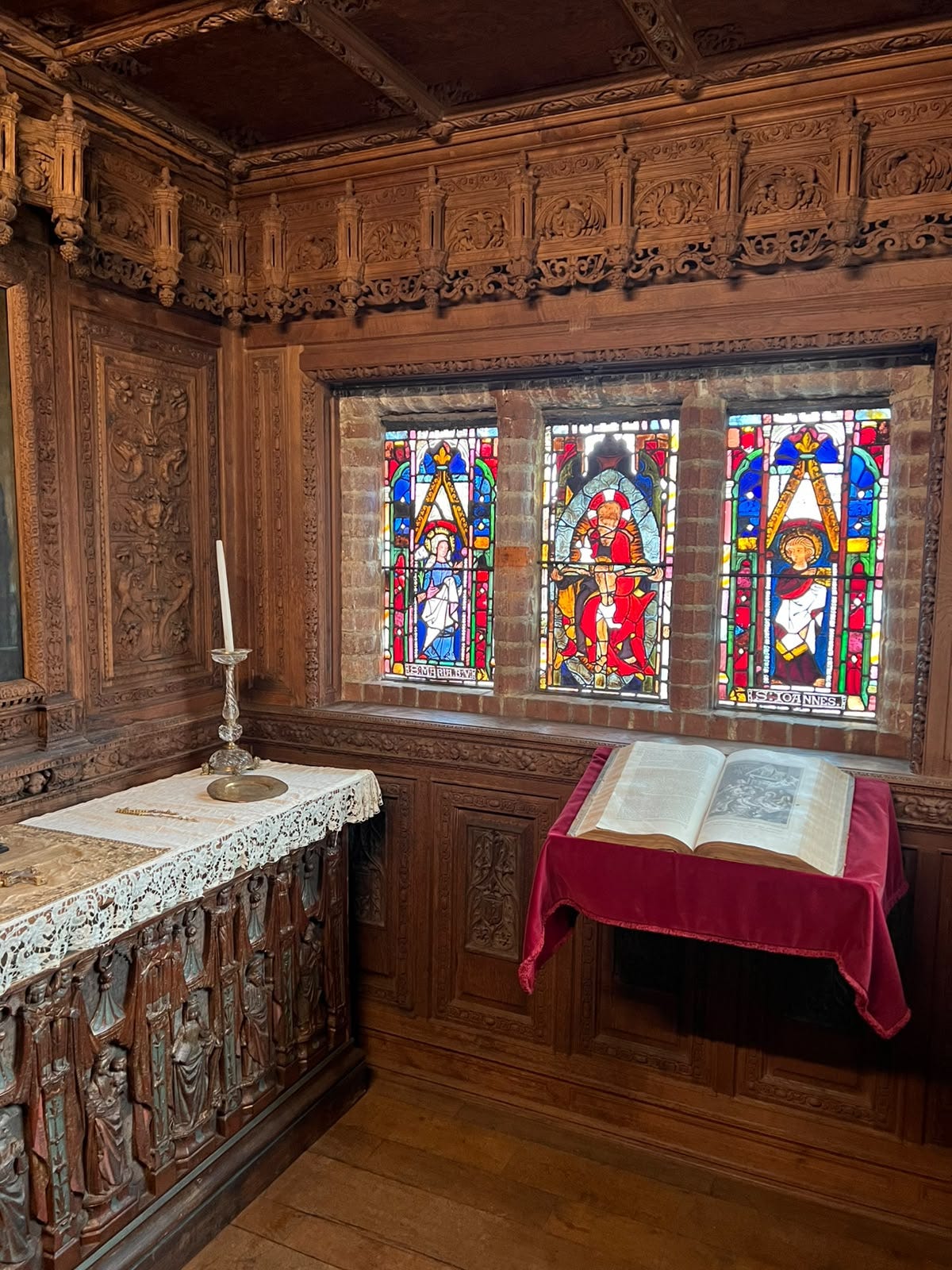
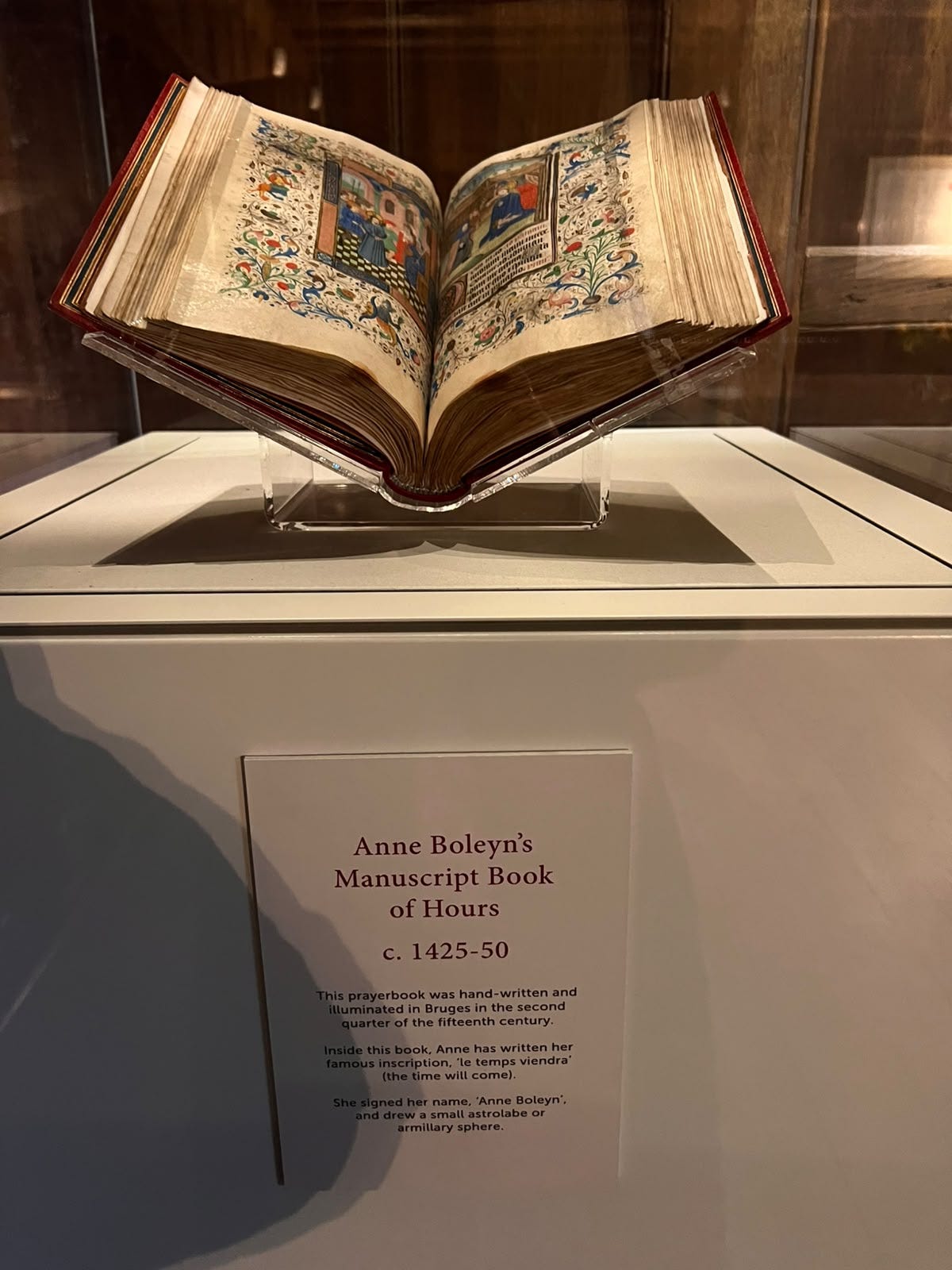
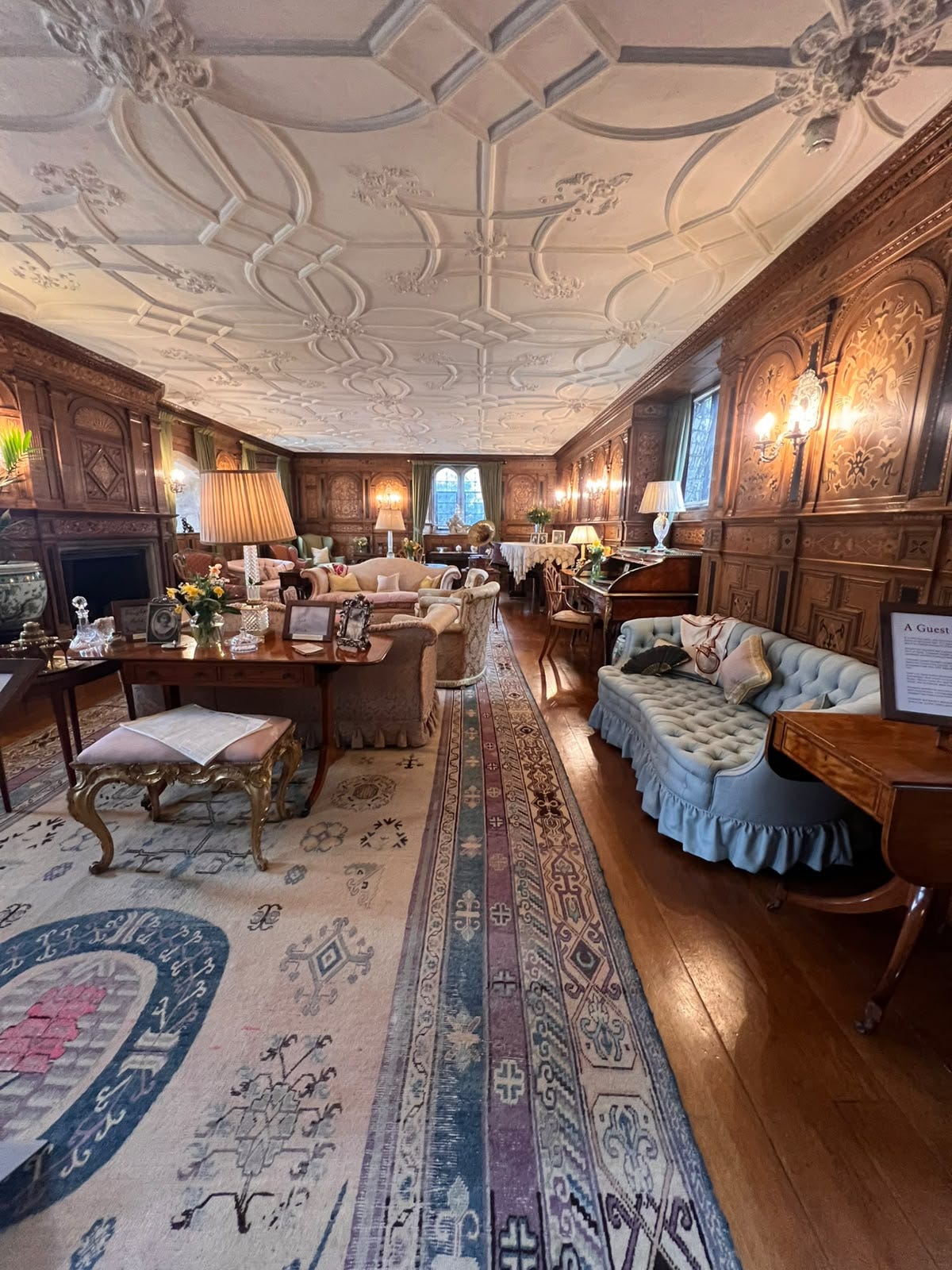
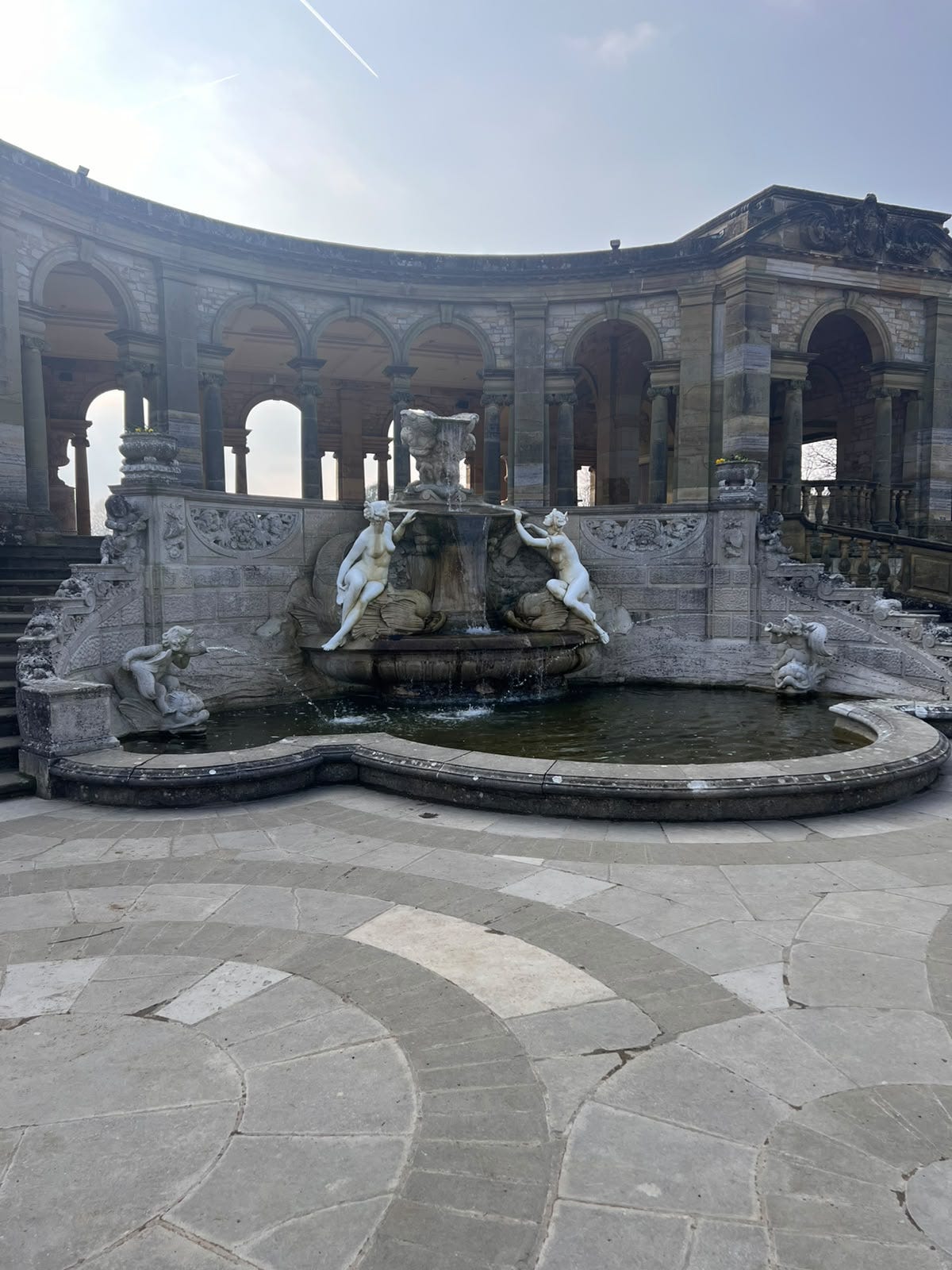
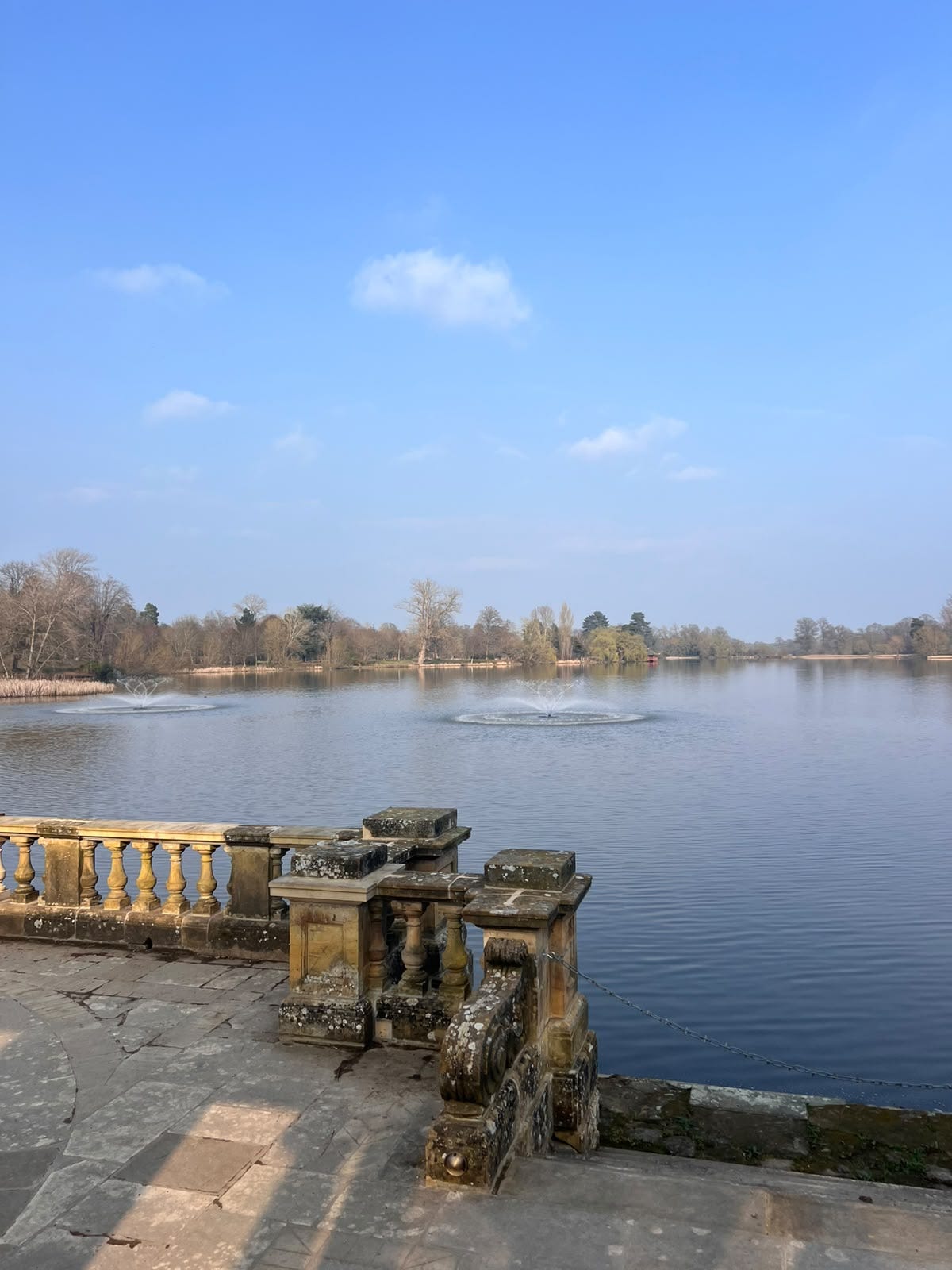
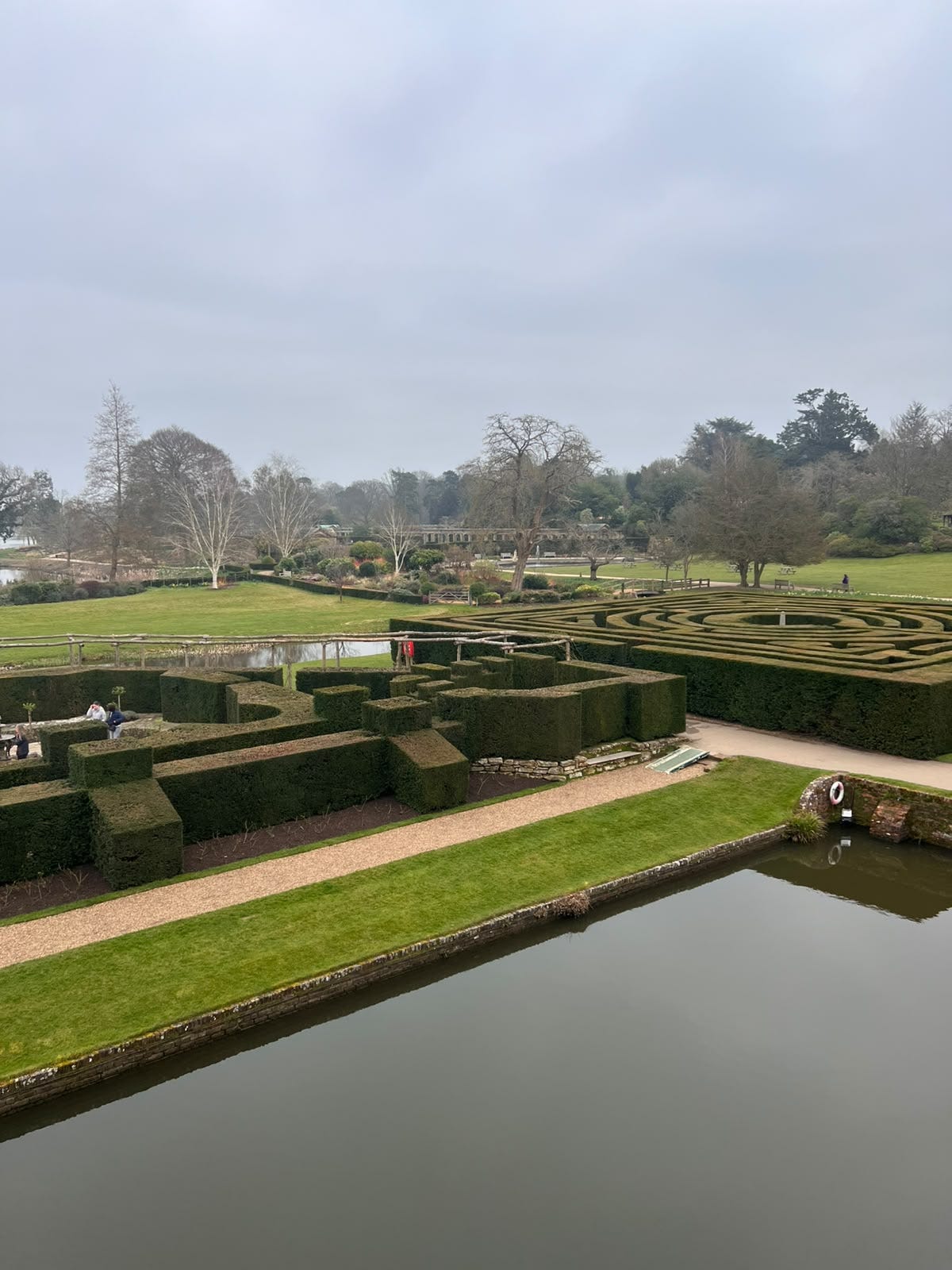
It took an American to save it properly. William Waldorf Astor bought Hever in 1903 and poured a fortune into it, building an entire mock Tudor village beside the castle just to house his guests without disturbing the original building, laying out an Italian garden crowded with statuary he had been collecting for years, digging a lake by hand, and planting a yew maze in 1904 that is still confusing visitors today, myself included. Inside, the Long Gallery runs the length of the castle hung with portraits, the old chapel still holds its stained glass and an oversized Bible, and one small case in a quiet corner stopped me completely, Anne Boleyn’s actual prayer book, a Book of Hours from the 1400s, with her own handwriting inside reading le temps viendra, the time will come. She wrote that line in a book meant for quiet prayer, with no idea at all how true it would turn out to be.
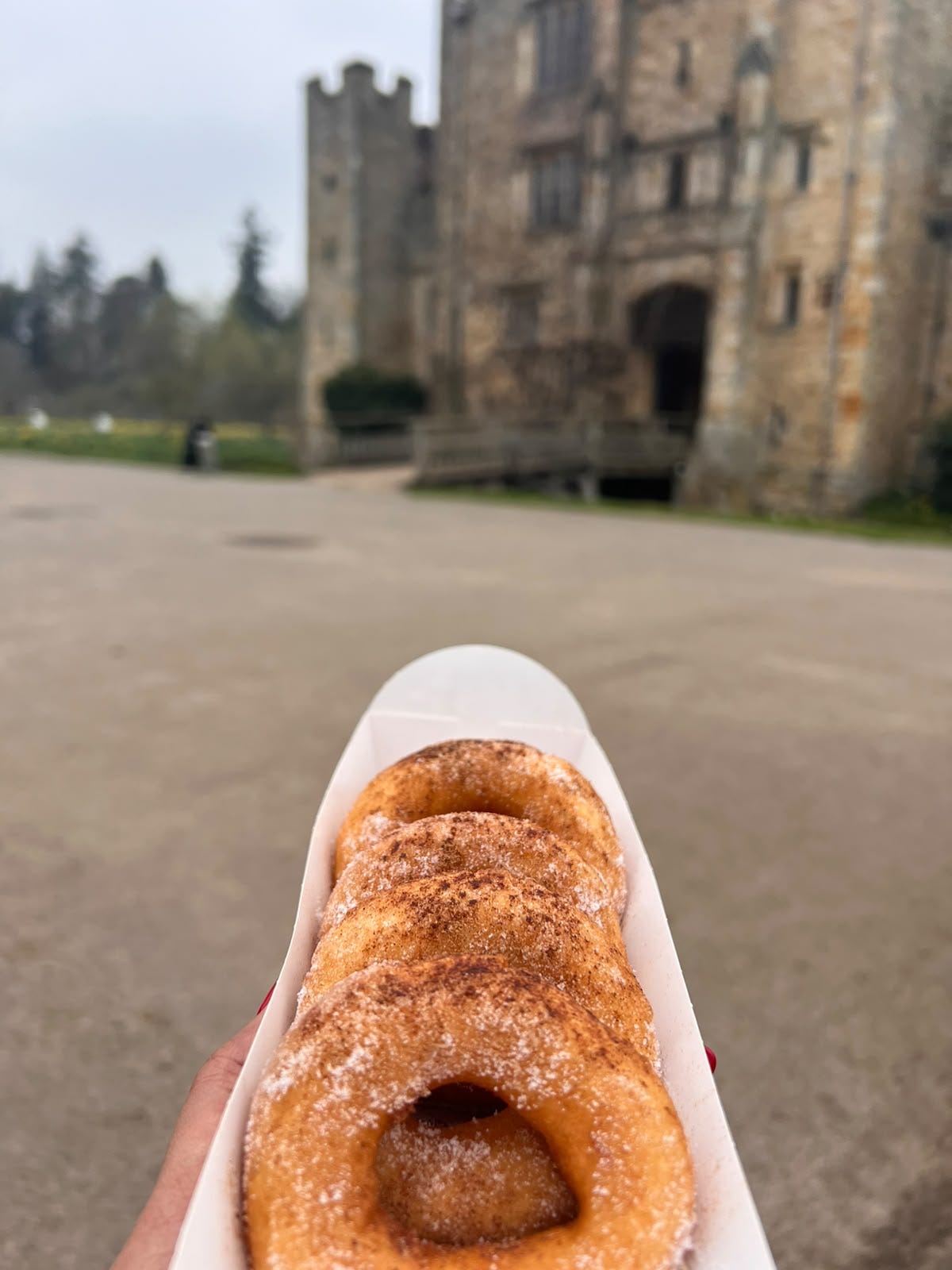
Right outside the main entrance, a small van was selling fresh doughnuts rolled in cinnamon sugar, and I bought a tray without a second thought. My paternal grandmother, my Daadi, used to make me doughnuts exactly like these when I was small, a recipe she picked up from a German woman while living in Kathmandu during my grandfather’s posting there. Daadi is no longer around, but a doughnut like that still manages to close the distance a little, a small, sugary date with her that I did not expect to have standing right outside a castle gate.
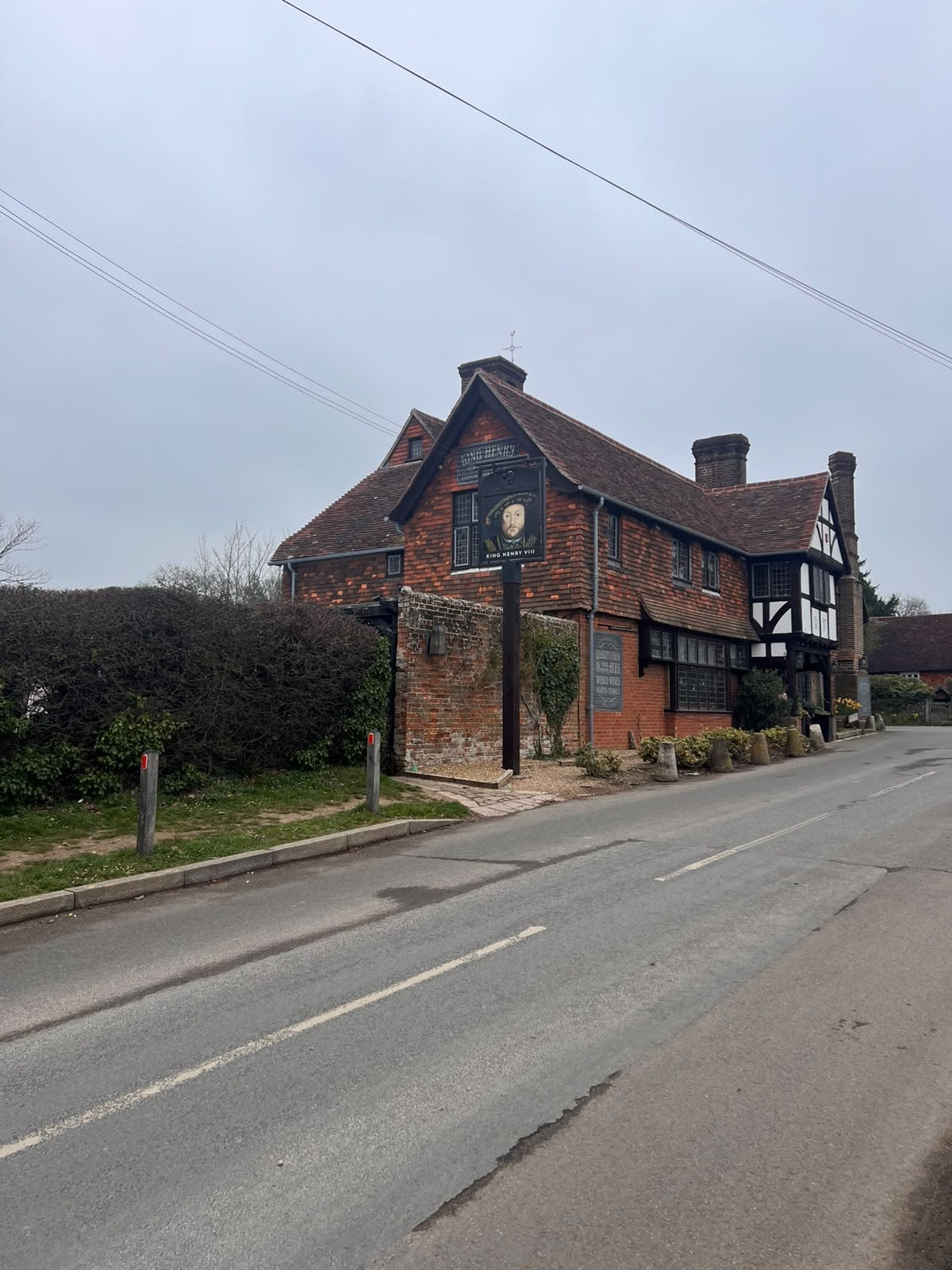
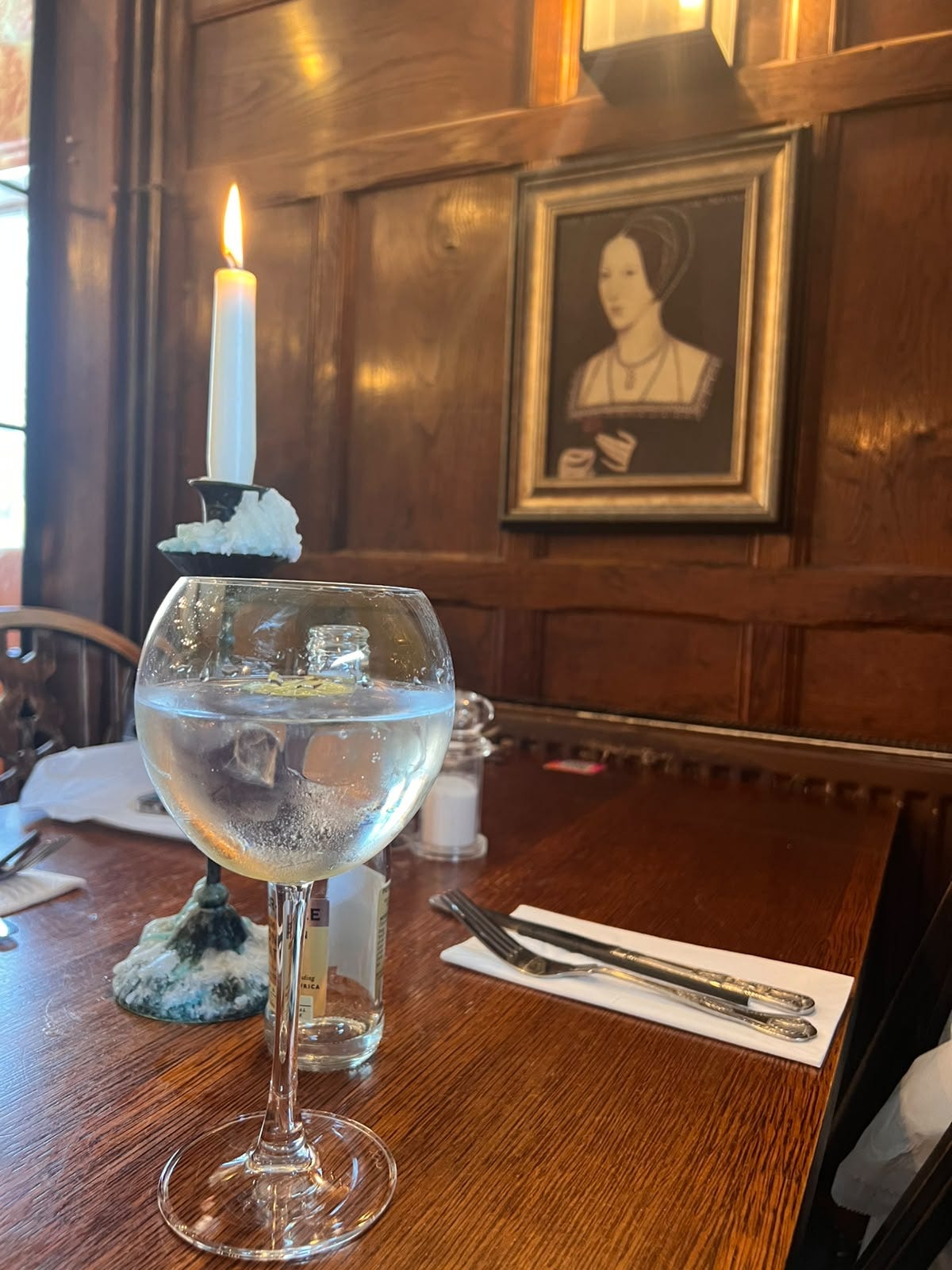
Lunch that day was at the King Henry the Eighth, a pub that has stood directly opposite the castle gates since 1597, with the current building dating to 1647, which makes it considerably older than most countries. A portrait of Anne Boleyn watches over the dining room, candlelight included, and I had a rhubarb gin that tasted like something a Tudor court would have thoroughly approved of, had gin existed yet.
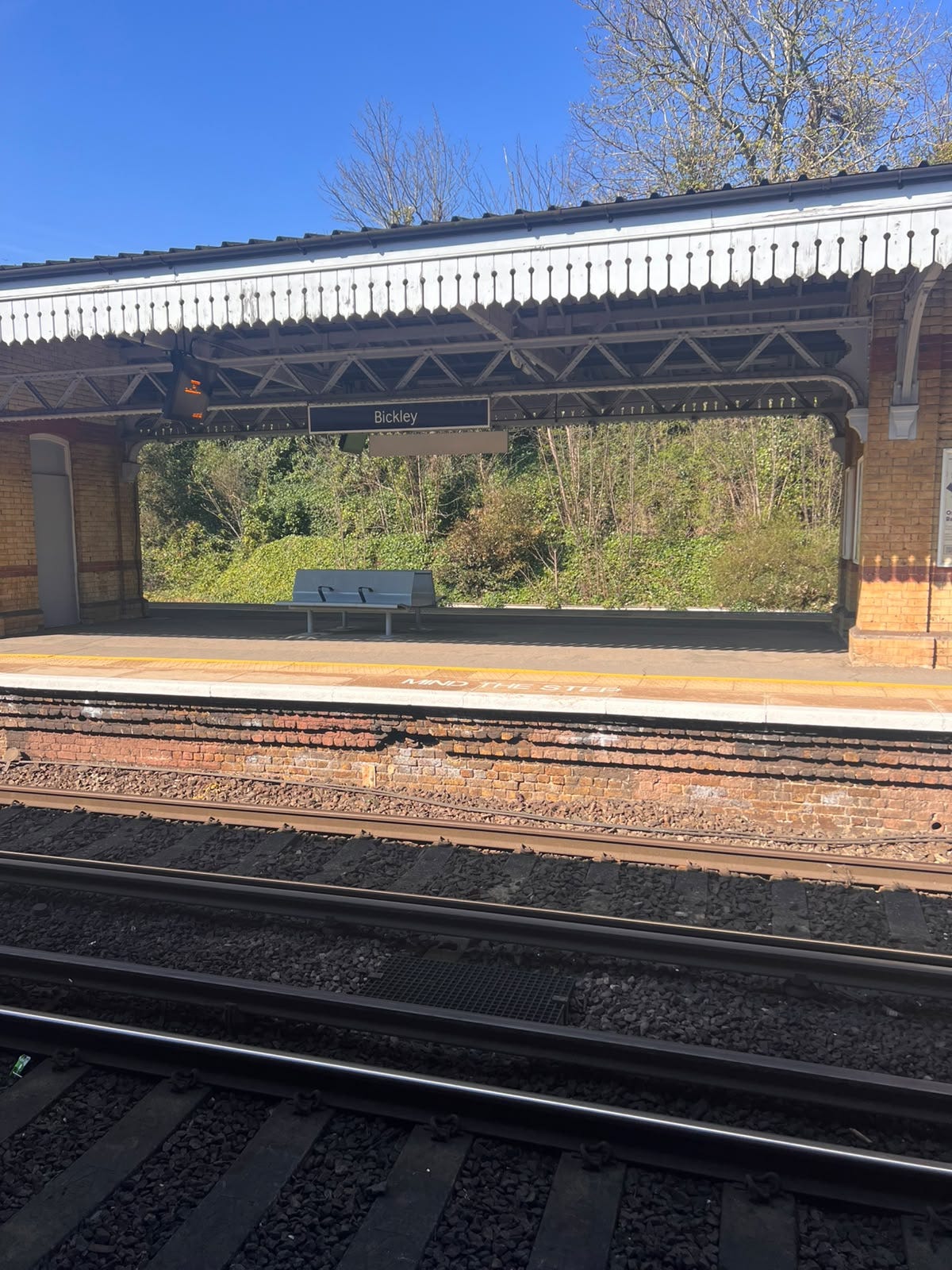
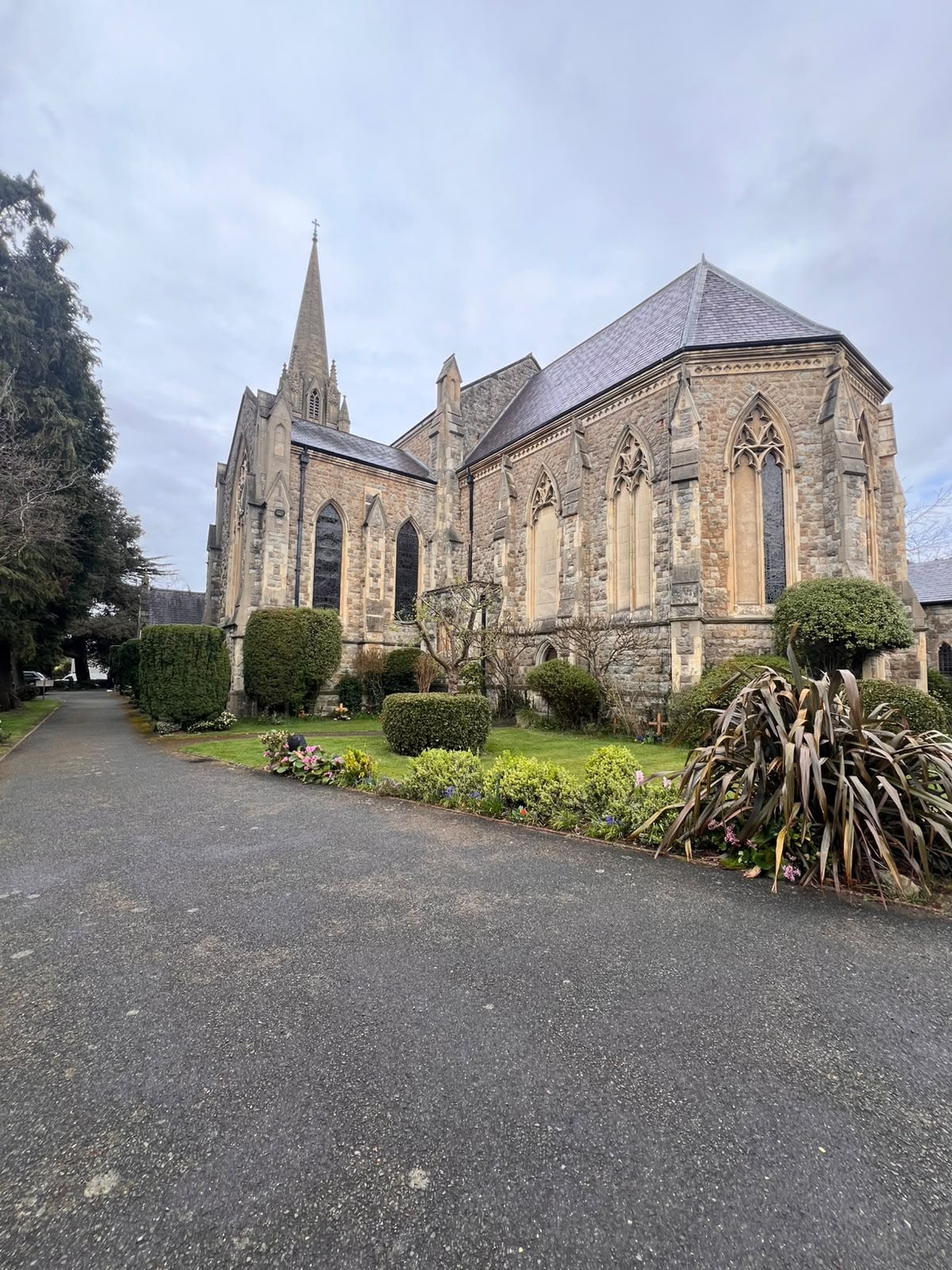
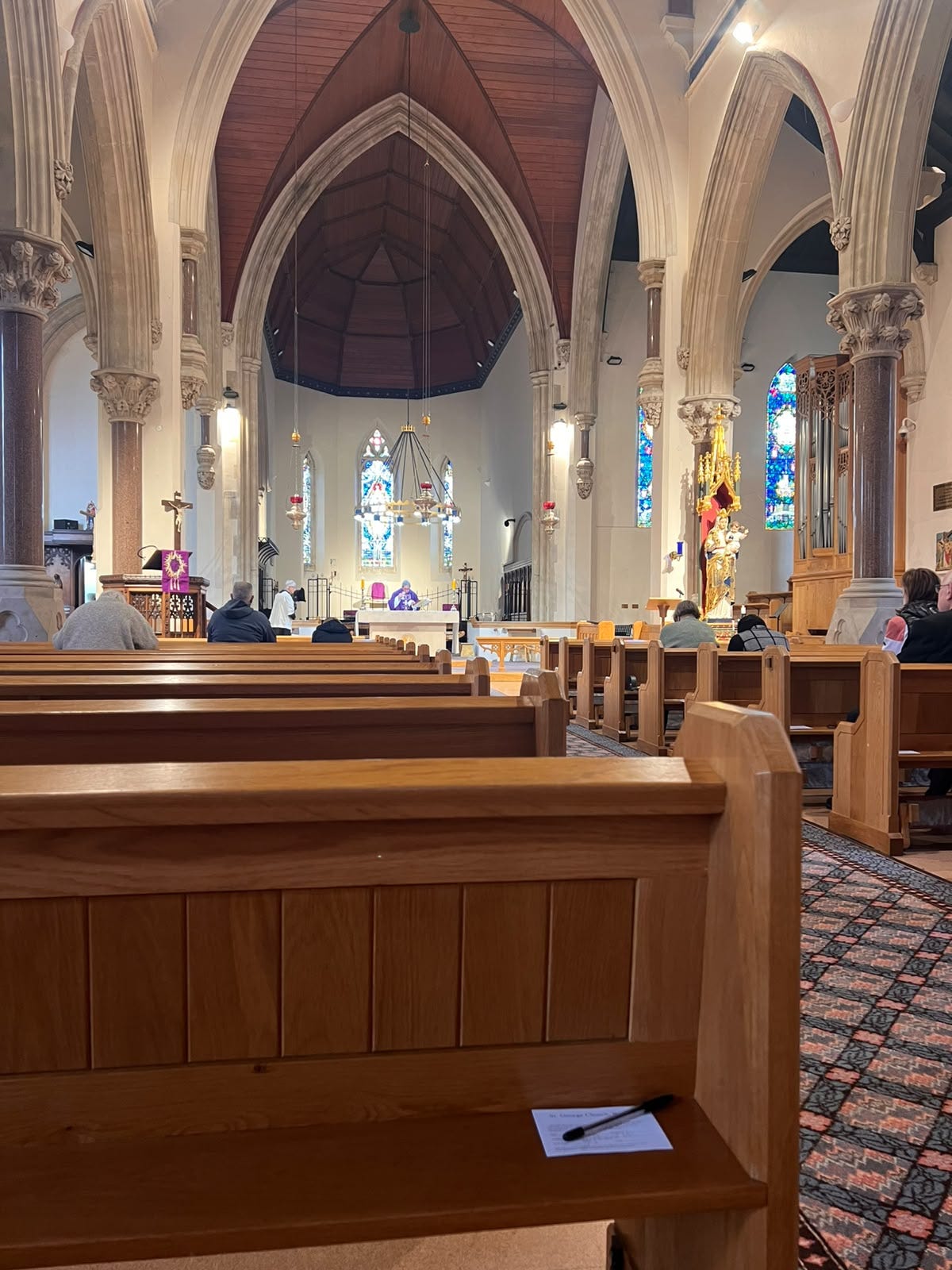
The final day in Kent was a quiet one, on purpose, starting at St George’s, Bickley, a Victorian church built in 1865 by the same man who built most of Bickley itself, right down to the family tomb he kept inside it. A fire gutted the roof in 1989, and decades before that a German flying bomb blew out most of its windows, which is why so many of them are simply bricked in rather than glazed, a former vicar’s idea, and apparently cheaper than replacing glass twice in one century. Kestrels nest in the tower now. I sat for a while, said nothing in particular, and let the quiet do what it does best.
Most evenings that week folded back into The Manor itself, and the kitchen there more than earned its keep, a few properly good dinners eaten slowly in the same window seat that had already done such reliable work for afternoon tea.
The UK is not finished with me, not even close, but the next few letters are headed somewhere entirely different. The United States is calling, several parts of it actually, and that story deserves to start fresh rather than get squeezed in at the end of this one. Kent, Hever, and everyone in between will still be here when I circle back.
Until the next bench,
Arpita